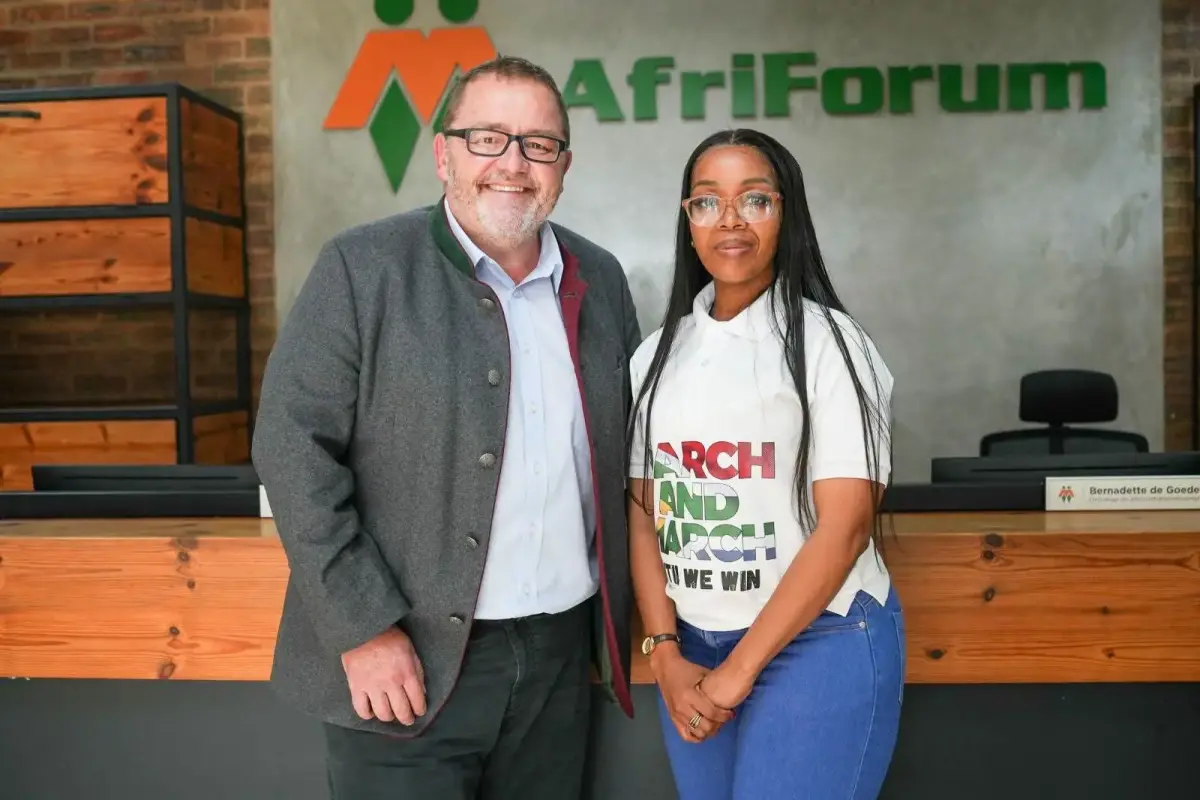
AfriForum and March and March have established a collaborative working group focused on benefiting communities and citizens at the grassroots level. The partnership was formed following a meeting on 18 August 2026, where both organisations discussed shared challenges, interests, and potential solutions.
The March and March delegation was led by its founder, Jacinta Ngobese-Zuma, while AfriForum was represented by CEO Kallie Kriel and a delegation from the civil rights organisation.
Keys areas of collaboration
The organisations identified capacity-building initiatives aimed at improving socio-economic conditions within the framework of the law, the promotion of mother-language education, accessible education, and the advancement of peaceful coexistence as potential areas of collaboration. Furthermore, they agreed to jointly pursue legal matters of mutual interest and support each other on issues relating to the rule of law and the fight against crime in communities, which includes illegal migration.
Ngobese-Zuma stressed the importance of creating a united South Africa founded on values of ubuntu, respect for cultural and religious beliefs, and the rule of law. She added that March and March believes in systems that ensure communities cooperate to hold the government accountable and uphold the rule of law.
Addressing government failures and border security
During the meeting, the participants addressed various challenges arising from government failure, such as the effective collapse of border control and inadequate crime prevention that leaves communities under a constant threat of crime. According to March and March, unsecured borders have serious consequences for the ailing economy, with skyrocketing trade in illicit goods affecting businesses and potentially resulting in job losses. The movement also stated that corruption and ineptitude in government require urgent attention and collaboration by community-based organisations that are not driven by narrow political interests.
Barend Uys, AfriForum's Head of Intercultural Relations and Cooperation, noted that poor government policies and obsolete ideologies are at the root of challenges facing communities across the SADC region, and that the ANC-led government does not put the interests of citizens first.
Building a future through mutual respect
Kriel emphasised that AfriForum already collaborates with various organisations and communities that share a commitment to building a better future, noting that differences on specific matters should not stand in the way of cooperation that benefits children. AfriForum expressed its willingness to share what has worked and what has not worked over the past 20 years to assist March and March in establishing a community-focused organisation.
Uys added that AfriForum has entered into collaboration agreements with numerous traditional communities and organisations, such as the Royal Leaders of South Africa (ROLESA) and various traditional councils.
Both entities confirmed that the interests of communities and citizens must always be pursued peacefully and within the framework of the law, emphasising that violence and intimidation have no place in these efforts.