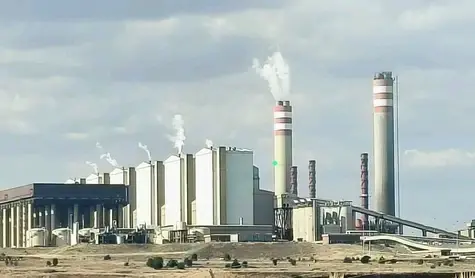
The South African power utility Eskom has announced on Friday that will be implementing Stage 3 of loadshedding over the weekend after ten months of uninterrupted power supply.
The utility on Friday said following over 10 months of uninterrupted electricity supply due to success of the Generation Recovery Plan,Eskom has encountered a temporary setback.As a result,Stage 3 loadshedding is being implemented from 17:00 today until Sunday midnight.Eskom will give an update on Sunday,2 February 2025.
The Group CEO has confirmed that over the past few days the power utility has experienced several breakdowns which force them to bring back loadshedding this weekend.
"This is a temporary setback,as loadshedding is largely behind us due to structural improvements in the generation fleet."
"Over the past seven days,we have experienced several breakdowns that require extended repair times.This has necessitated the use of all our emergency reserves,which now need to be replenished over the weekend,"said Eskom Group Chief Executive Officer,Dan Marokane.
Eskom's Nxumalo has revealed that the utility has saved billions of Rands over the past 10 months when loadshedding was suspended and promised that the country will never experience loadshedding as it happened in 2023.
"The structural improvements and efficiency gain we have made to our coal-fired generation fleet to date are safe and the R16.30 billion saved in diesel spend from 1 April 2024 to 30 January 2025 is also safe."
"The weekend loadshedding allows for the replenishment of the Open-Cycle Gas Turbines and pumped storage reserves in preparation for next week.We are committed to ensuring that South Africa is in no way returning to the levels of loadshedding that we experienced in 2023,"said Group Executive Generation,Bheki Nxumalo.
The power utility promised that a total of 3 410MW will be returned to service by 3 February 2025 to ease pressure on the grid and further enhance the reliability of supply.
The power utility emphasized that it continues to face network overloading issues in certain local areas due to illegal connections,vandalism,meter tampering,unauthorised network operations,theft of network equipment,and purchasing electricity from unlicensed vendors.