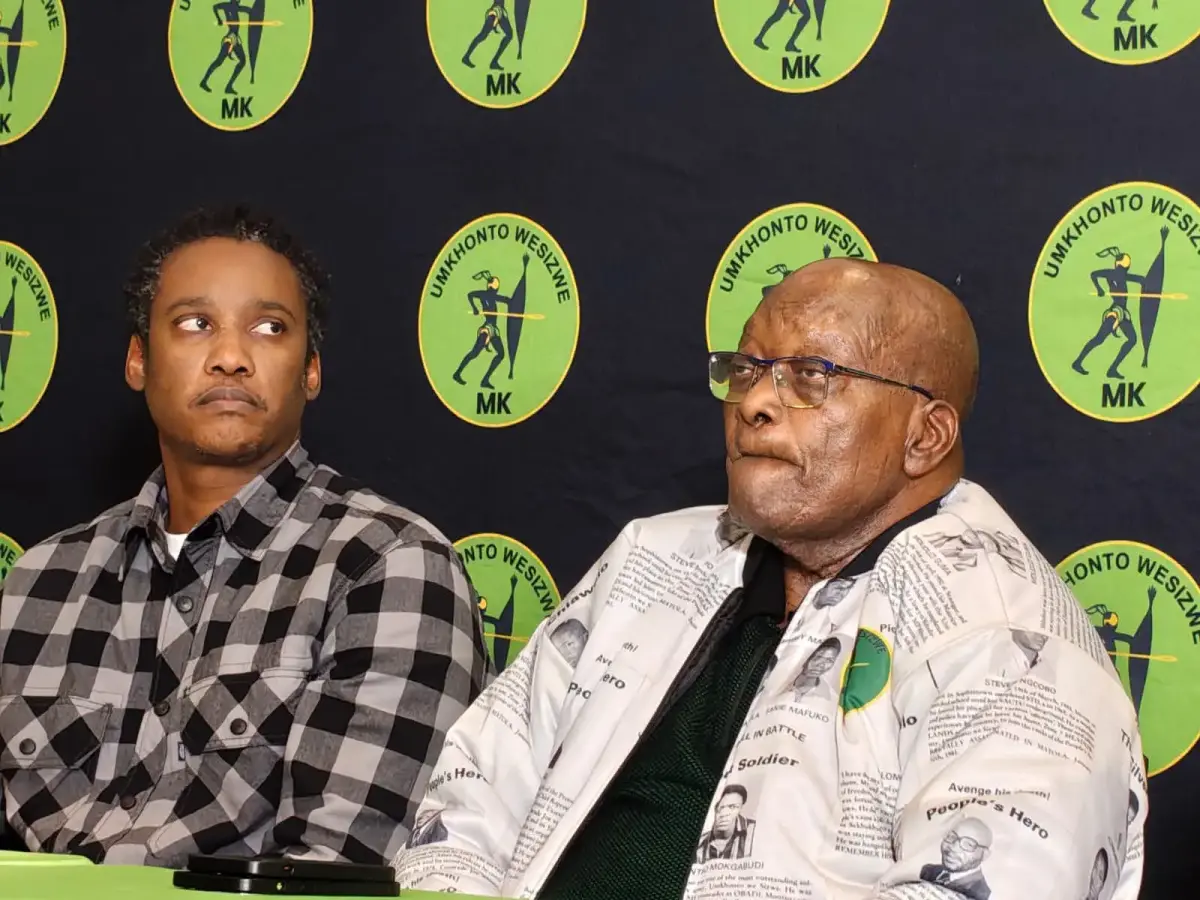
In a major political overhaul that has sent shockwaves through South Africa's political landscape, former President Jacob Zuma has reshuffled the top leadership of the uMkhonto weSizwe (MK) Party. The centerpiece of this restructuring is the appointment of his son, Duduzane Zuma, as the party's First Deputy President.
Announced during a media briefing in Durban, the sweeping changes mark a dramatic consolidation of power by Jacob Zuma over the country's third largest political party, reshaping its internal hierarchy, reassigning key veterans, and restructuring financial and administrative oversight.
The elevation of Duduzane Zuma
Duduzane Zuma's appointment to the position of First Deputy President places him directly below his father in the party's hierarchy. While Duduzane has previously attempted to forge a political footprint – most notably through aborted political ambitions within the African National Congress (ANC) – this move represents his highest and most definitive political promotion to date.
The decision immediately intensifies domestic speculation regarding long-term succession planning within the MK Party. Notably, Duduzane has never held elected public office or served as a Member of Parliament. Elevating him above seasoned political operators within the organisation has drawn intense scrutiny, fueling internal debates over dynastic politics versus organisational loyalty.
Key casualties and reassignments
The leadership overhaul resulted in the removal or reassignment of several prominent figures who helped build the MK Party into a formidable electoral force.
Dr. John Hlophe: The former Western Cape Judge President has been removed as the party's First Deputy President. However, Hlophe remains a vital asset to the party, transitioning to serve as the MK Party's official Parliamentary Leader in the National Assembly.
Nathi Nhleko: The veteran politician and former Police Minister was stripped of his position as National Chairperson. He has been succeeded by Reverend Mxolisi Eswart Phakathi.
Nomsa Dlamini: Dlamini was removed from her role as Deputy Secretary-General and replaced by Lindiwe Mtshali, the former national secretary of the MK Party Women's League.
New faces and reinforcements
To balance the displacement of veteran figures, Jacob Zuma injected fresh leadership dynamics into the party's executive structure:
Tony Yengeni: The veteran politician has been officially confirmed as the MK Party's Second Deputy President, adding established political weight to the executive tier alongside Duduzane.
Willies Mchunu: The former ANC stalwart joins the party Presidency while maintaining his crucial operational role as the MK Party's KwaZulu-Natal (KZN) provincial leader. According to party statements, Mchunu will focus heavily on strategic advice, organisational guidance, and presidential oversight.
Financial and structural overhaul
Beyond personnel changes, the reshuffle included a sharp restructuring of administrative and financial bodies within the party:
Dissolution of the Strategic Presidential Team: Just weeks after its creation, this body was abruptly dissolved. In an unusual move, the party explicitly distanced itself from the team's actions, stating that it would not assume responsibility for any financial liabilities, debts, or contracts entered into by members of the dissolved team without explicit authorisation.
Reinstatement of the Presidential Task Team (PTT): In place of the dissolved structure, the PTT has been formally reinstated with immediate effect, reporting directly under the mandate and direction of Jacob Zuma.
Political implications for the MK Party
As South Africa continues to navigate a shifting coalition and opposition ecosystem, the MK Party's latest reconfiguration signals a tight-fisted approach to internal governance by its founder. By placing family and trusted loyalists at the absolute apex of the organisation while shifting seasoned legal and administrative minds like John Hlophe to parliamentary duties, Jacob Zuma is aggressively tightening his grip on the party's trajectory.
Whether Duduzane Zuma can convert his prominent new title into broad-based electoral appeal – and manage the internal friction caused by sidelining party veterans – will determine the next critical chapter for the MK Party.