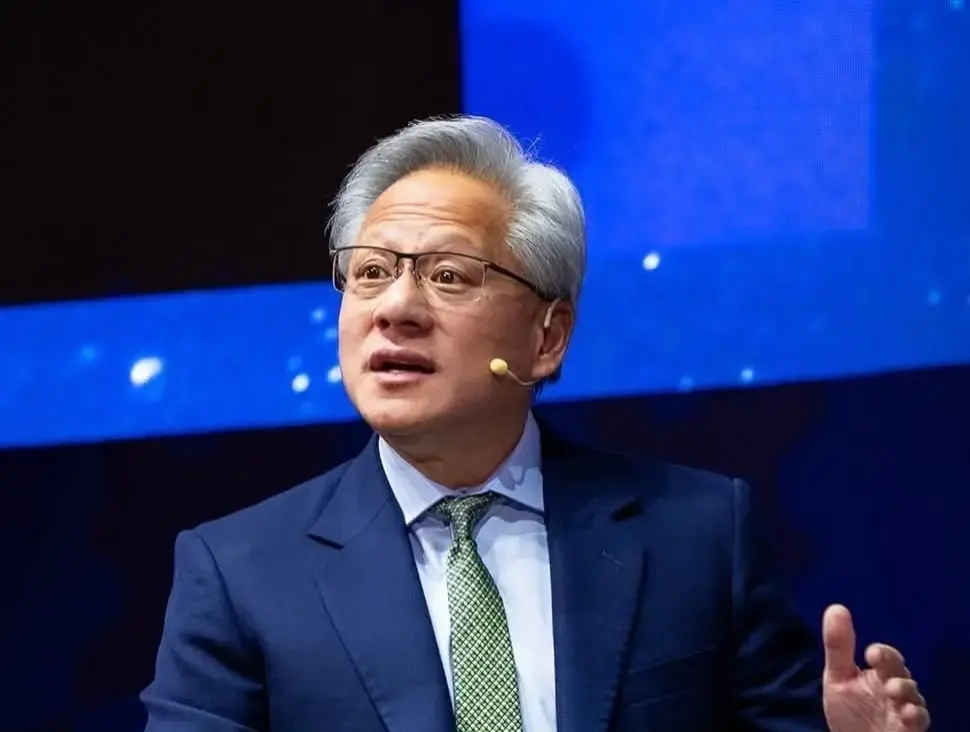
NVIDIA Corporation announced on 12 November 2026, that co-founder and longtime chief executive Jensen Huang has resigned as President, Chief Executive Officer, and member of the Board of Directors, effective immediately.
The sudden exit brings an abrupt close to Huang's 33-year tenure at the helm of the artificial intelligence chipmaker, following weeks of intensifying scrutiny over personal conduct, corporate governance, and national security concerns.
Interim leadership and board restructuring
To stabilise the company during this unexpected transition, NVIDIA's Board of Directors appointed Executive Vice President and Chief Financial Officer Colette Kress to serve as Interim Chief Executive Officer. Kress, who has led NVIDIA's finance organisation since September 2013 after nearly 25 years in senior financial roles at Cisco and Microsoft, will retain her duties as CFO while the Board conducts a formal search for a permanent successor among both internal and external candidates.
Simultaneously, the Board appointed longtime director and venture investor Harvey C. Jones as its first-ever Chair of the Board. Jones, a former CEO and Executive Chairman of Synopsys who has served on NVIDIA's board since its founding in 1993, emphasised that the separation of board oversight and daily management is supported by an experienced executive team committed to maintaining uninterrupted operations and product roadmaps.
National security scrutiny and governance crisis
While NVIDIA's official announcement credited Huang's immeasurable contributions to the industry without specifying a reason for his departure, public reporting traces exit to a rapidly unfolding crisis that began in late October 2026. On 29 October, The New York Times reported that U.S. intelligence officials suspected Huang of having a close personal relationship with Alice Huang, a former managing director at Singapore-based computing firm Megaspeed International.
U.S. authorities alleged that Alice Huang – who is not related to Jensen Huang – had ties to China's Ministry of State Security, an allegation Beijing dismissed as a campaign to malign China. Because Megaspeed International was already under investigation by U.S. and Singaporean regulators over potential violations of U.S. chip export controls, the report triggered bipartisan calls from U.S. lawmakers for congressional briefings and Huang's resignation.
As market pressure mounted and shareholder lawsuits emerged, Huang sent an internal memo to NVIDIA staff on 8 November acknowledging that he had been unfaithful to his wife and apologising to his family and employees. On the same day, NVIDIA's Board formed an independent committee with outside legal counsel to investigate whether national security or proprietary company secrets had been compromised, though the Board noted it had no reason to believe any breaches had occurred.
The situation reached a breaking point on 11 November when The New York Times reported that Huang had also engaged in a second extramarital relationship with Kimberly Powell, a senior NVIDIA executive who reported directly to him. According to regulatory fillings, the Board formally accepted Huang's resignation later that day.
Market reaction and path forward
The leadership shakeup has rattled financial markets, contributing to a steep sell-off that saw NVIDIA shares drop more than 13 percent in early trading on 12 November. Industry analysts view the transition as a defining test for the semiconductor giant as it navigates regulatory headwinds and prepares to deliver its third-quarter fiscal 2027 financial results on 17 November.
In her initial remarks as interim chief executive, Kress sought to reassure stakeholders, stating that she remains focused on building upon NVIDIA's technological foundation and executing its strategy across accelerated computing and artificial intelligence for customers, partners, developers, and shareholders.