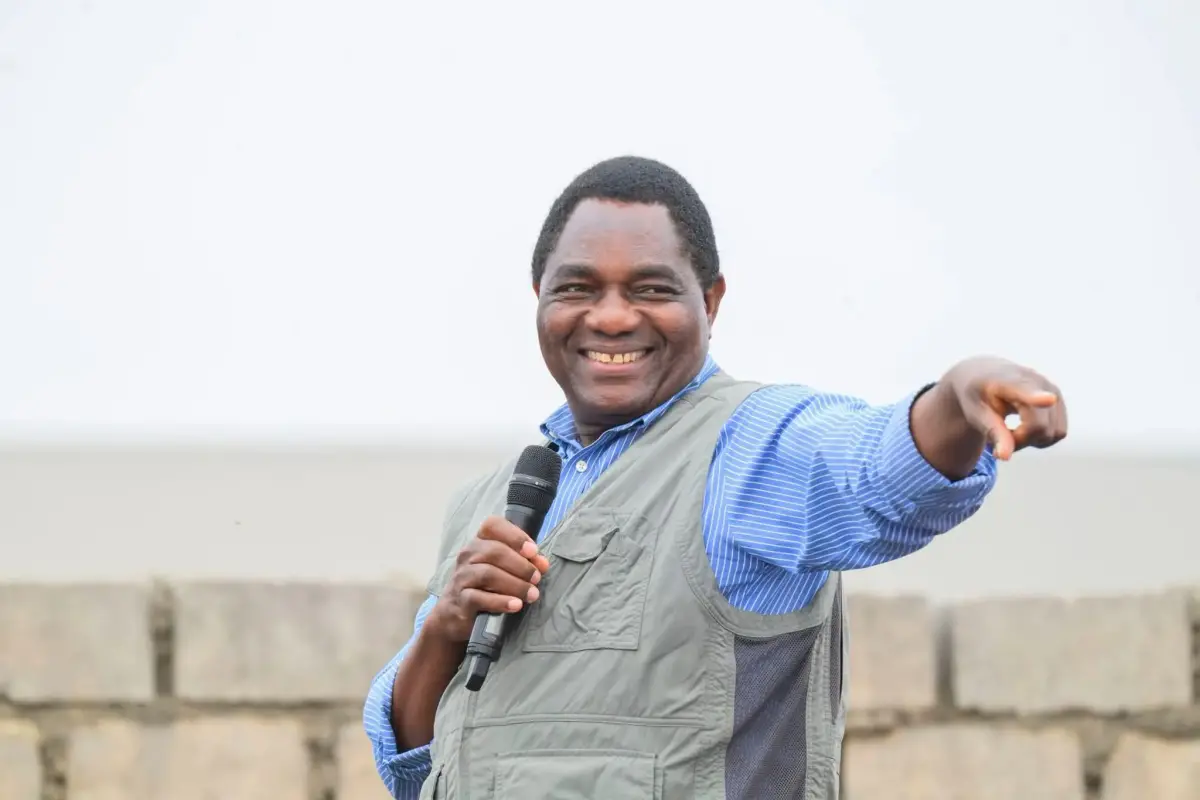
Zambian President Hakainde Hichilema has been re-elected to a second five-year term following a closely watched and fiercely contested general election. According to the Electoral Commission of Zambia (ECZ), Hichilema secured an outright victory in the first round without the need for a run-off, capturing roughly 61.4% of the total vote.
He garnered 2,965,326 votes out of the 5 million ballots cast, outpacing his closest challenger, opposition leader Brian Mundubile, who finished with approximately 38% (1,856,217 votes).
A mandate built on economic recovery
The August election served as a crucial referendum on Hichilema's reformist agenda and his administration's economic stewardship. Since taking office in 2021 after years of opposition, Hichilema – affectionately known as “Bally” – has focused heavily on repairing a copper-rich nation that was previously plunged into a severe pandemic-era debt crisis.
During his first term, Hichilema's government successfully navigated complex sovereign debt restructurings, stabilised the national currency, and worked to rein in inflation. However, the campaign also highlighted ongoing public frustrations. While macroeconomic indicators showed substantial recovery, many everyday Zambians continued to grapple with persistent cost-of-living pressures and economic hardships, fueling a surprisingly strong mobilisation behind the opposition.
In his victory address, Hichilema acknowledged these divergent viewpoints and reached out across the political divide:
“To those citizens who preferred the ideas presented by our opponents, we hear you, and we will continue to work for you to ensure that every Zambian benefits from the development we are deivering.”
Tensions and electoral controversies
Despite the decisive margin, the electoral process faced significant logistical turbulence and political friction.
Vote counting was temporarily halted by the ECZ following reports of attacks on polling station officials and the theft of select ballot papers. Counting resumed hours later under heavily reinforced security, with military personnel deployed to secure sensitive sites – a move that drew mixed reactions, including caution from the Zambia Conference of Catholic Bishops.
Tensions peaked on election night when security forces arrested multiple leading opposition figures, with police citing potential threats to state security. Challenger Brian Mundubile claimed his home was raided in an aggressive political maneuver, casting shadows over the transparency of the post-election environment.
International observer missions, including one from the European Union, noted that while voting day itself was largely peaceful, the broader campaign phase suffered from an uneven playing field, late legal adjustments, and restrictions affecting fundamental freedoms.
Looking ahead
As Hichilema prepares to embark on his second term, his administration faces the dual challenge of solidifying its structural economic gains and addressing the immediate financial struggles of everyday citizens. Positioned at the center of international attention regarding critical green-transition minerals and foreign investment competition, Zambia's political stability and economic trajectory remain vital benchmarks for the broader Southern African region.