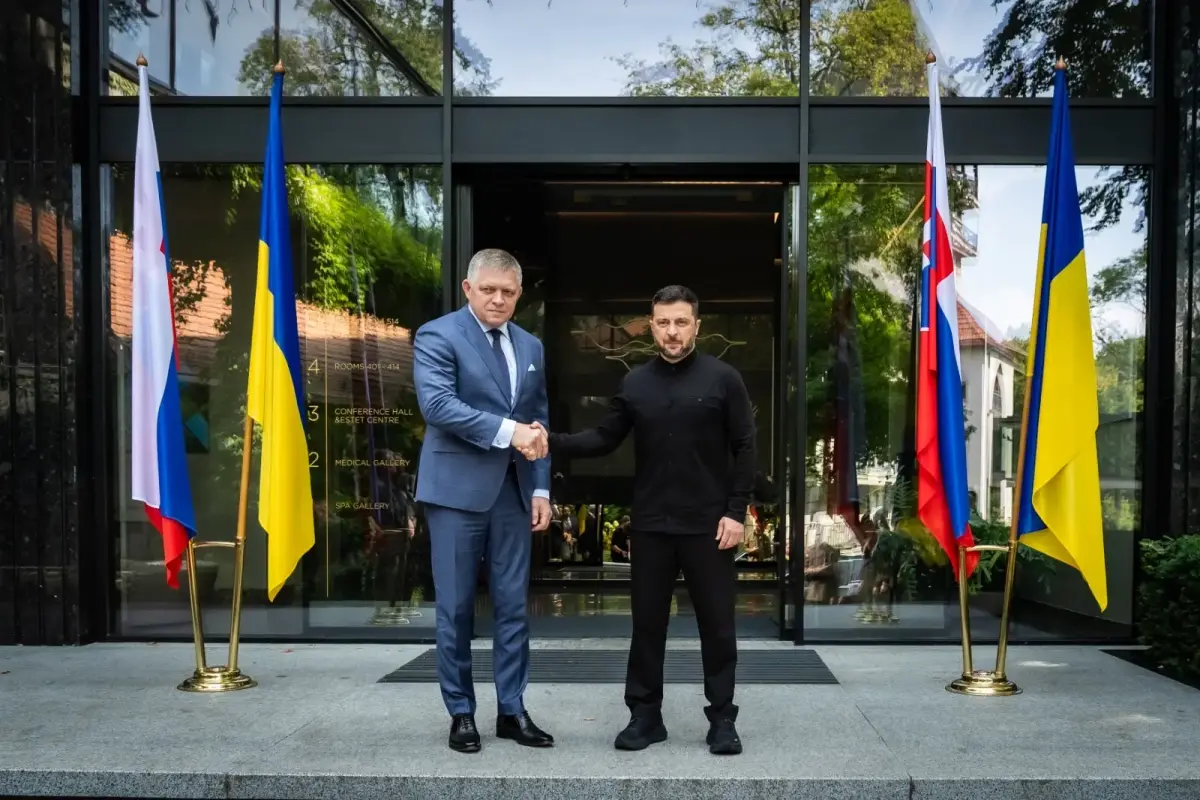
Slovak Prime Minister Robert Fico announced on Monday that Slovakia has official halted emergency electricity supplies to Ukraine, escalating a long-standing dispute over the suspension of Russian oil transit through the Druzhba pipeline.
The move marks a significant intensification in diplomatic tensions between the two nations, as Slovakia joins Hungary in leveraging energy resources to pressure Kyiv over the status of the vital oil pipeline.
The core of the dispute
The conflict centers on the disruption of the southern leg of the Druzhba pipeline, which has been inactive since January 27,2026. While Ukrainian officials attribute the outage to damage caused by Russian drone strikes, both the Slovak and Hungarian governments has repeatedly expressed skepticism, accusing Kyiv of deliberately obstructing the flow of Russian crude oil to secure political leverage.
Prime Minister Fico, who issued an ultimatum to Kyiv late last week, stated that the decision to cut emergency power was a “reciprocal measure” necessitated by the ongoing oil crisis.
“I have fulfilled what I declared on Saturday: if oil supplies to Slovakia are not restored by Monday, I will ask SEPS [the state-owned transmission company] to halt emergency electricity supplies to Ukraine,” Fico announced via social media. He further emphasised the scale of previous aid, noting that in January 2026 alone, Slovakia provided twice as much emergency electricity to help stabilise the Ukrainian grid as it did throughout the entirety of 2025.
Reactions and impact
The decision has drawn sharp criticism from Kyiv. Ukraine's Foreign Minister, Andrii Sybiha, condemned the ultimatum, asserting that such pressure is counterproductive and that demands regarding the pipeline should be directed at the Kremlin, not Kyiv, given that the infrastructure disruption is a consequence of Russia's ongoing aggression.
Despite the move, Ukraine's national energy operator, Ukrenergo, signaled that the immediate impact on the country's grid would be limited. In a statement, the agency clarified that emergency assistance from the Slovak direction is used sparingly and that the current suspension of these specific emergency services would not compromise the stability of Ukraine's integrated power system.
Potential for further escalation
The situation remains volatile, with Prime Minister Fico warning that this is only the “first reciprocal step.” He has suggested that if the transit of raw materials is not resolved, his government may reconsider its stance on Ukraine's aspirations to join the European Union and is prepared to introduce further retaliatory measures.
The dispute highlights deepening fractures within the European Union, where Slovakia and Hungary – both of which remain dependent on Russian oil – have frequently diverged from the broader pro-Ukrainian consensus. As both sides hold their ground, observers warn that the standoff could further complicate energy security and diplomatic relations in Central Europe throughout the winter season.