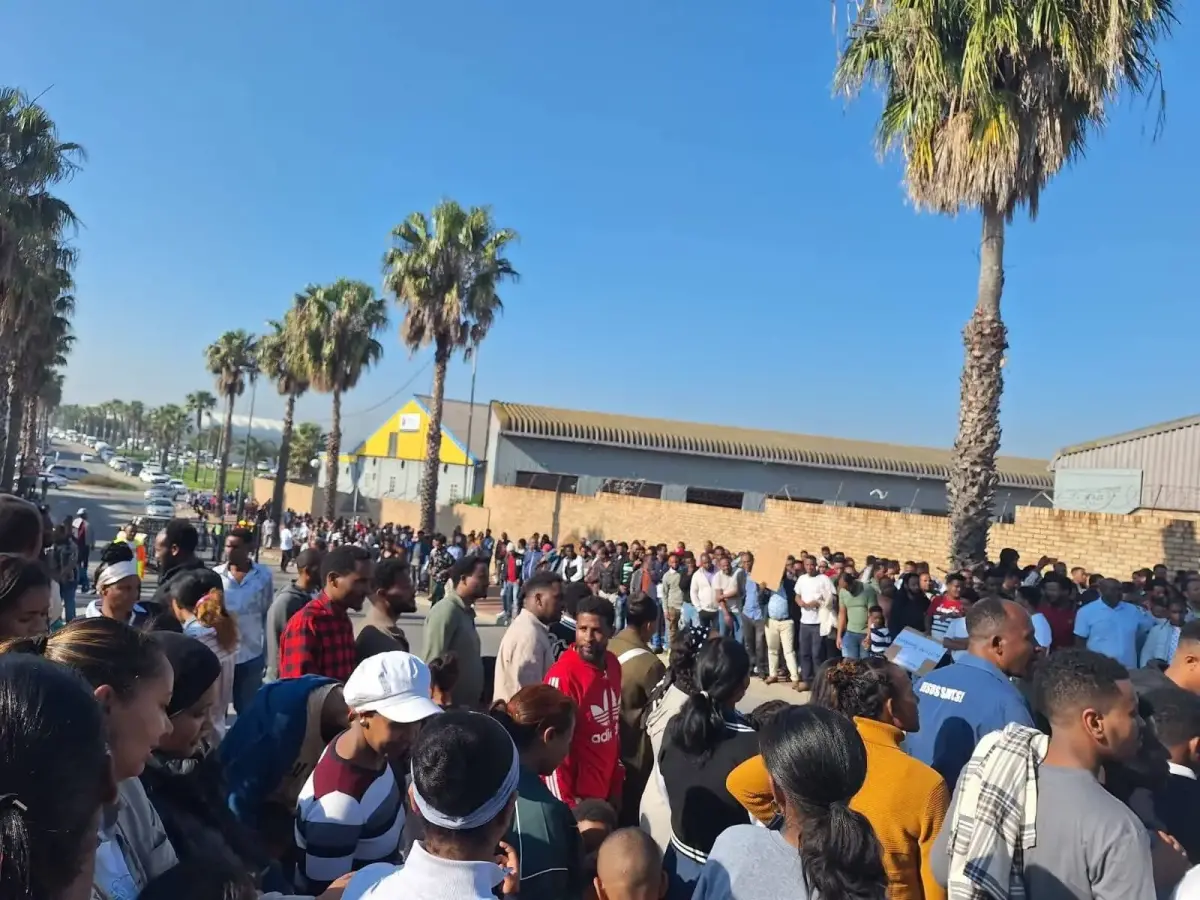
South Africa has resumed full acceptance of new asylum applications at its Refugee Reception Offices this month. On 28 September 2026, the Department of Home Affairs directed all offices to immediately receive and process claims from anyone presenting in person.
The United Nations High Commissioner for Refugees welcomed the decision, describing it as a vital step that restores access to asylum procedures in line with national and international law.
The legal breakthrough
The change follows the Constitutional Court's unanimous judgement of 7 July 2026 in Scalabrini Centre of Cape Town and Another vs Minister of Home Affairs and Others. The Court struck down key sections of the Refugees Act 130 of 1998 – sections 4(1)9f),4(1)(h),4(1)(i) and 21(1B) – that had permitted the exclusion of asylum seekers for irregular entry, failure to report within five days, or lack of a transit visa, without any assessment of the merits of their claims. These provisions, introduced by 2017 amendments and in force from 2020, were found to violate the principle of non-refoulement and the constitutional right to seek asylum. The invalidity took immediate effect.
Practical impact on applications
As a result, the five active Refugee Reception Offices – in Pretoria, Durban, Musina, Cape Town and Gqeberha – must now accept applications in person, capture biometrics, and issue Section 22 asylum-seeker visas that legalise stay while claims are determined. First-instance decisions by Refugee Status Determination Officers have generally been processed within required timeframes in recent years, although significant backlogs remain at the appeals and review stages.
Related rulings and policy reforms
The resumption coincides with a separate Constitutional Court ruling in May 2026 confirming that failed asylum seekers have no statutory right to lodge subsequent applications after final rejection. Together, the two judgements open the front door to genuine first-time claims while closing the possibility of endless reapplications. They also take place against the backdrop of Cabinet's Final Revised White Paper on Citizenship, approved in April 2026. That policy proposes a “first safe country” principle, greater use of digital and virtual procedures, and the longer-term relocation of reception functions closer to ports of entry.
Implications going forward
For asylum seekers
The change restores a fundamental safeguard. Individuals previously turned away on technical grounds can now lodge claims and receive temporary documentation, reducing the risk of detention or detention before their cases are heard on the merits. Vulnerable groups, including children, stand to benefit particularly, as their claims can no longer be blocked solely by parental procedural failures.
For the asylum system
An initial increase in applications is expected. While first-instance capacity appears relatively stable, any surge will test already strained appeals bodies. Sustained staffing, funding and digital improvements will be essential to prevent new backlogs. The Department has emphasised efficiency gains and online permit extensions as part of broader modernisation efforts.
For policy and public confidence
The combination of open access at the first stage with finality after rejection, together with proposed first-safe-country rules, represents an attempt to create a more coherent and manageable system. Success will depend on consistent implementation, transparent decision-making, and careful design of any future broader-focused or virtual processes so that they do not recreate barriers in a different form.
Public and political scrutiny of migration remains high, with large-scale repatriations of undocumented nationals, civic protests, and local government elections scheduled for November 2026. The government has framed recent reforms as restoring the rule of law while upholding constitutional and international obligations. Maintaining that balance – protecting those with genuine claims while managing mixed migration and public confidence – will determine the effectiveness of the renewed asylum process in the years ahead.
The principle now firmly reaffirmed is that access to asylum cannot be denied on procedural technicalities alone. Claims must be assessed on their substance. How well South Africa translates that principle into fair, efficient and sustainable practice will shape both protection outcomes and the integrity of its immigration system.