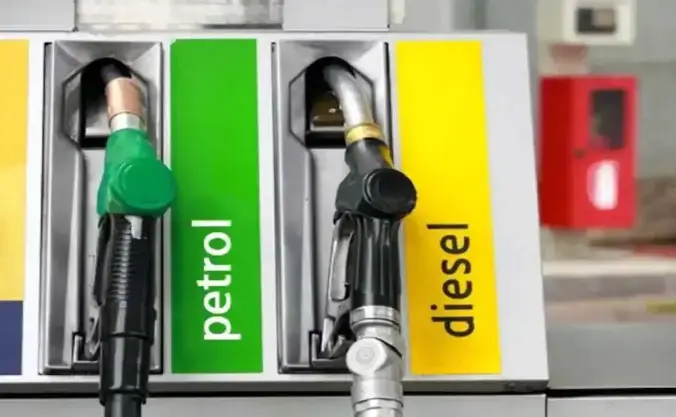
South African motorists and businesses face significantly higher costs from Wednesday, 7 October 2026, after the Department of Mineral and Petroleum Resources implemented one of the steepest monthly fuel price increases in recent years. For the first time in the country's history, the inland price of 95 petrol has crossed the R30 mark.
The official price changes
The adjustment, announced by the Minister of Mineral and Petroleum Resources, took effect at midnight. Petrol 95 rose by R3.33 per litre, while petrol 93 increased by R3.12 per litre. Diesel with 0.05 per cent sulphur content climbed by R2.84 per litre at wholesale level, and the cleaner 0.005 per cent sulphur grade rose by R3.24 per litre. Illuminating paraffin increased by R3.58 per litre at wholesale. An additional 4.38 cents per litre was added through the slate levy mechanism, taking that levy to 87.66 cents per litre.
As a result, inland motorists in Gauteng and other inland regions now pay approximately R30.25 a litre for 95 petrol and R29.88 for 93 petrol. At the coast the prices are lower, at roughly R29.38 for 95 and R29.09 for 93. Wholesale diesel prices sit at about R31.95 inland for the 0.05 per cent grade and between R33.23 and R33.29 for the 0.005 per cent grade, with coastal figures slightly lower. Because diesel is regulated only at wholesale level, actual pump prices are typically higher and will often fall in the R33 to R35 range depending on the station and its margins.
What it costs at the pump
The practical impact is immediate. Filling a 50-litre tank with inland 95 petrol now costs around R1 513, roughly R167 more than it did under the previous price of about R29.92 a litre. Drivers of larger vehicles and commercial fleets face even steeper increases per fill-up.
Why the sharp increase
The sharp rise was driven primarily by international factors. During the review period that ran from late August to early October, the average price of Brent crude oil climbed from approximately 87.89 US dollars to 101 US dollars per barrel. The department cited continued tensions between the United States and Iran, uncertainty over oil flows through the Strait of Hormuz, higher shipping costs and declining global inventories of refined products as the main contributors. These developments pushed up the Basic Fuel Price for petrol, diesel and paraffin. Local pricing elements, including the self-adjusting slate levy that recovers previous under-recoveries, added a further layer to the increase.
A continuing upward trend
The October adjustment continues a pronounced toward trend. Since March 2026, coastal 95 petrol has risen by nearly 48 per cent, from around R19.92 a litre to the current R29.38, adding almost R10 per litre in just seven months. Inland prices followed a similar path, briefly peaking earlier in the year before climbing further.
Impact on households and the economy
Higher fuel costs feed quickly into the broader economy. Transport operators, freight companies, taxi associations, farmers and manufacturers all face increased operating expenses that are likely to be passed on to consumers through higher prices for food, goods and services. Households that rely on illuminating paraffin and liquified petroleum gas for cooking and lighting will also feel the pressure. Economists have warned that successive fuel increases of this magnitude risk elevating inflation and further squeezing already stretched household budgets.
How South Africa sets fuel prices
South Africa adjusts fuel prices monthly according to a regulated formula that tracks international product prices, the rand-dollar exchange rate and a set of statutory margins and levies. The system is designed to protect against extreme short-term volatility while ensuring that local prices reflect global market conditions. The next scheduled adjustment is due in nearly November 2026.
For now, motorists are left to absorb the higher cost of mobility at a time when many households are already under financial strain.