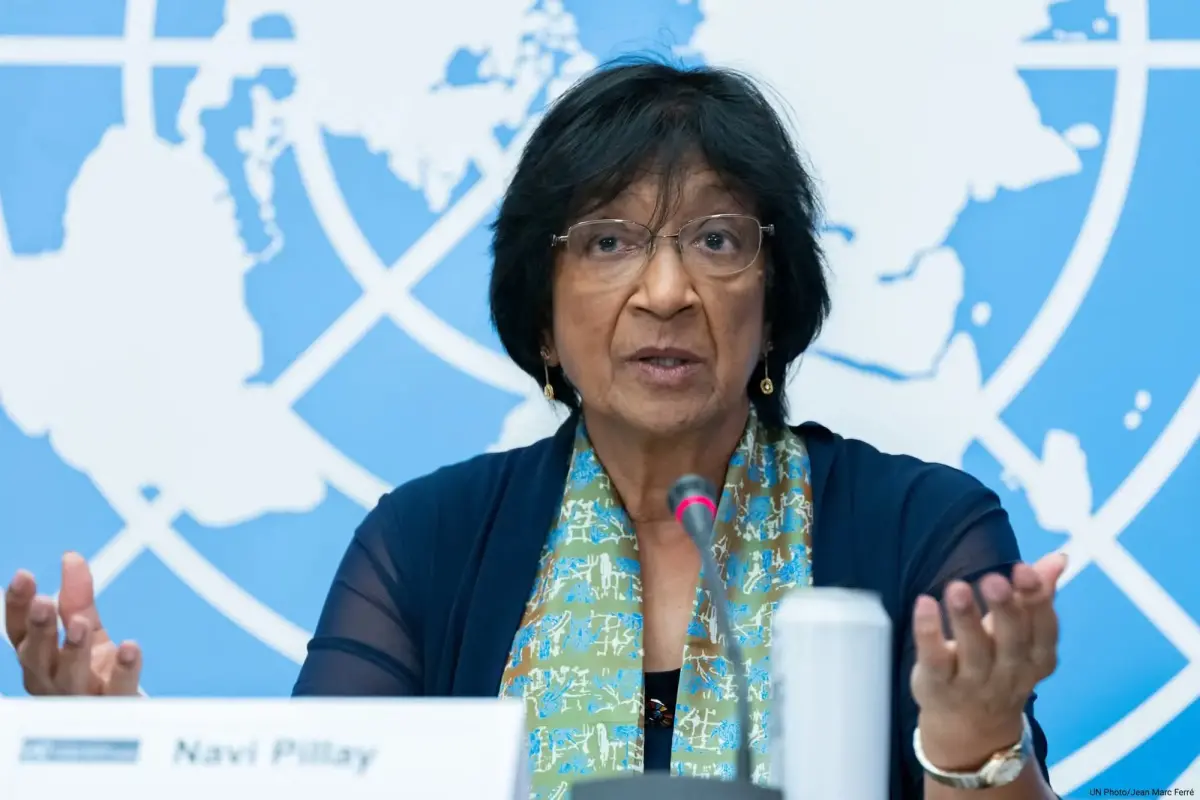
South African jurist and human rights lawyer Navanethem “Navi” Pillay has been awarded the 2026 Nobel Peace Prize for her lifelong efforts to promote peace and international law. The Norwegian Nobel Committee announced the decision on 9 October 2026, recognising the 85-year-old as “one of the most respected international jurists of our time” whose work has been instrumental in ensuring that war crimes, crimes against humanity, and genocide are prosecuted.
Pillay becomes the fifth South African to receive the Peace Prize, following Albert Luthuli, Desmond Tutu, Nelson Mandela, and F.W. de Klerk, and the first South African woman to win it. The committee praised her “judicial rigour, personal integrity and considerable courage” at a time when international legal institutions face growing political pressure.
From apartheid South Africa to global stages
Born on 23 September 1941 in Clairwood, Durban, to a family of Tamil Indian descent, Pillay grew up under apartheid. Her father was a bus driver, and the family faced the severe restrictions and discrimination of the era. Supported by community donations, she studied at the University of Natal, earning a BA in 1963 and an LLB in 1965. She later became the first South African to obtain a Doctor of Juridical Science degree from Harvard Law School (1988), after completing an LLM there in 1982.
In 1967 she opened her own law practice in Natal (now KwaZulu-Natal), becoming the first non-white woman to do so in the province. For nearly three decades she defended anti-apartheid activists and political prisoners. Among her notable achievements was a 1973 court victory that secured the right of Robben Island prisoners – including Nelson Mandela to access lawyers and legal materials. She also exposed torture and the effects of solitary confinement on detainees.
After the end of apartheid, President Nelson Mandela appointed her an acting judge of the High Court of South Africa in 1995, making her the first non-white woman to hold that position.
Building international criminal justice
Pillay's international career began the same year when the UN General Assembly elected her as a judge on the International Criminal Tribunal for Rwanda (ICTR). She served for eight years, including four as president. During her tenure the tribunal established landmark precedents, including the recognition that rape and sexual violence could constitute genocide and crimes against humanity.
She later served as a judge on the International Criminal Court (2003-2008) before becoming United Nations High Commissioner for Human Rights from 2008 to 2014. In more recent years she has served as an ad hoc judge at the International Court of Justice in the case concerning alleged genocide against the Rohingya in Myanmar, and she chaired the UN Independent International Commission of Inquiry on the Occupied Palestinian Territory. That commission concluded that Israel had committed genocidal acts in Gaza – a finding that remains highly contested and drew sharp criticism from the Israeli government after the Nobel announcement.
The Nobel citation and context
The Nobel Committee emphasised Pillay's role in strengthening a rules-based international order. Committee chair Jorgen Watne Frydnes stated that her career demonstrated how legal measures can help prevent war and violence, and that the award serves as a reminder of the importance of the international rule of law amid rising conflicts and attacks on judicial institutions.
Pillay received news of the prize while attending a conference at the Nuremberg Palace of Justice – the same venue where Nazi leaders were tried after the Second World War. In her initial reaction she expressed surprise, thanked supporters, and dedicated the honour to survivors of international crimes and defenders of justice. She also quipped lightly about sharing the prize with Donald Trump, referencing the previous year's laureate who had given her medal to the US president.
The decision has been welcomed by many human-rights organisations and South African leaders as recognition of a career spent holding power to account. It has also drawn condemnation from the Israeli government, which rejected the Gaza commission's findings and criticised the Nobel Committee.
At 85, Pillay continues to serve on international judicial bodies. Her selection underscores the Nobel Committee's focus on the defence of international law at a moment when that system faces significant political challenges. From a Durban law office under apartheid to the highest courts and human-rights institutions of the United Nations, her trajectory remains one of the most consequential in modern international justice.