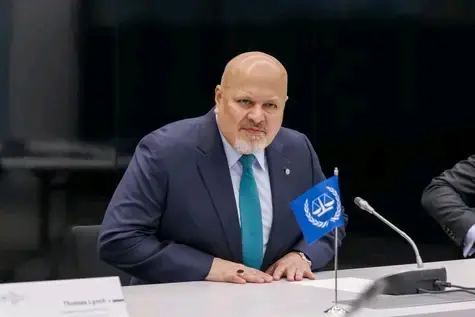
In an unprecedented move that has sent shockwaves through international law, member states of the International Criminal Court (ICC) voted to remove Chief Prosecutor Karim Khan from office. Conducted behind closed doors at United Nations Headquarters in New York, the emergency session resulted in an 82-to-13 vote to dismiss Khan over findings of “serious misconduct and a serious breach of duty” linked to allegations of sexual harassment.
Yet, the historic decision – the first time an ICC prosecutor has ever been removed – cannot be viewed in a vacuum. Khan's dramatic downfall unfolds against the backdrop of an intense, multi-year geopolitical firestorm triggered by his office's pursuit of arrest warrants for top Israeli leaders over war crimes in Gaza.
The convergence of personal misconduct allegations with high-stakes international pressure has left the world's premier war crimes tribunal facing the most profound institutional crisis in its 24-year history.
The anatomy of a clash: Warrants and Western clash
The friction between Khan and key Western powers escalated dramatically when his office announced it was seeking arrest warrants for Israeli Prime Minister Benjamin Netanyahu and then-Defense Minister Yoav Gallant – alongside Hamas leaders – for war crimes and crimes against humanity committed during the Gaza war.
For the ICC, crossing the threshold to investigate a Western-backed ally marked a historic departure from its traditional focus. The reaction was swift and fierce, characterised by severe diplomatic and financial pressure as British officials and U.S. lawmakers exerted heavy pressure behind the scenes to dissuade Khan from moving forward.
Additionally, the United States government imposed sweeping economic sanctions and visa restrictions on Khan, alongside a dozen other court personnel, branding the court's actions a “political witch hunt” while top U.S. officials openly vowed to “dismantle” the institution “brick by brick.” At the same time, Israeli diplomats and allied member states actively lobbied capitals around the globe, pushing for Khan's delegitimisation and removal.
Misconduct allegations and the weaponisation of scandal
The internal crisis within the prosecutor's office began to surface when accusations emerged that Khan had subjected a junior member of his staff to sexual harassment and an inappropriate sexual relationship. Khan strongly denied the allegations, maintaining his innocence throughout the ordeal.
However, the timing and political utility of the scandal immediately transformed it into a battleground. Supporters of the ICC's mandate argued that external actors were weaponising the allegations to sink the Gaza investigation and discredit the court. Conversely, Israel and its allies argued that Khan used the high-profile warrants against Israeli officials as a smoke screen to deflect scrutiny from his own misconduct.
Crucially, individuals close to the case – including the accuser herself – stressed that the misconduct claims were entirely separate from the legal merits of the Gaza investigation. The evidence underpinning the warrants against Netanyahu and Gallant was compiled by independent investigators and subsequently validated by a panel of ICC judges, meaning Khan's personal exit does not nullify the legal actions taken by the court.
Uncharted waters for international justice
Despite assertions that the judicial process remained independent, the optics of 82 member states voting to oust a prosecutor who dared to target Western-allied leadership have dealt a severe blow to the court's perceived impartiality.
The removal exposes a fundamental vulnerability of the Rome Statute system: the ICC possesses no police force and relies entirely on voluntary state cooperation, funding, and political goodwill to survive. When that goodwill fractures along geopolitical fault lines, the court becomes deeply paralysed.
As the ICC prepares to elect a successor, the institution stands at a dangerous crossroads. The next chief prosecutor will inherit not only an active docket of high-profile atrocities – including ongoing scrutiny of West Bank settlement expansion and the war in Gaza – but also an aggressive campaign by global superpowers determined to neuter international accountability. Whether the ICC can weather this storm and prove it serves global justice rather than political convenience remains to be seen.