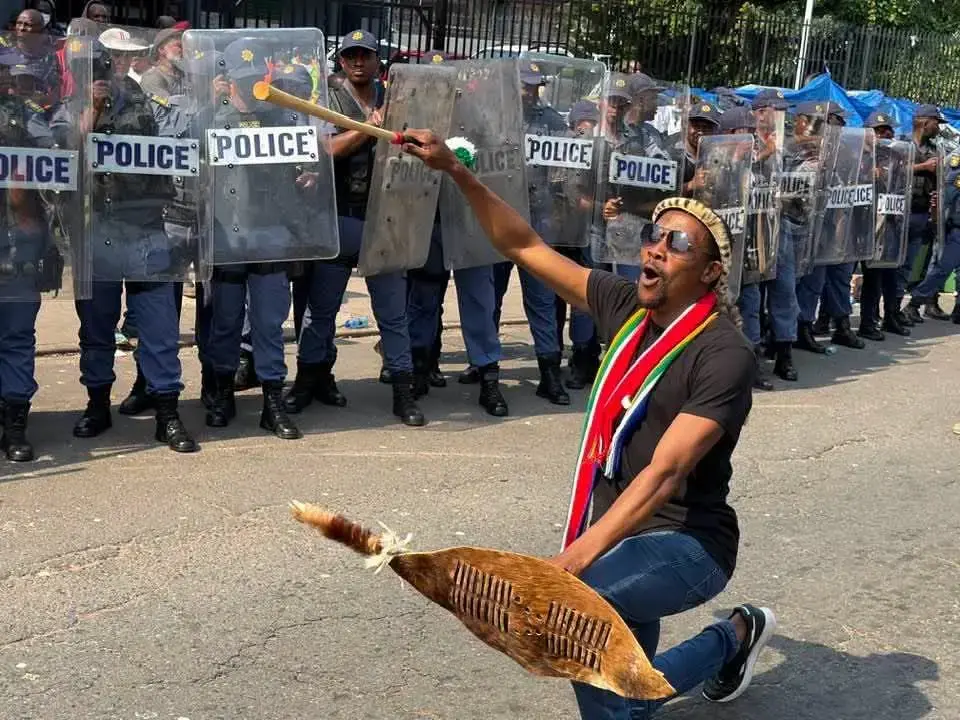
The Correctional Supervision and Parole Board has officially revoked the parole of March and March Movement activist Wandile Method Nsibande, ordering his return to a correctional facility to serve out the remainder of his sentence until 19 May 2034.
The decision follows Nsibande's re-arrest by Department of Correctional Services officials last month in Durban over alleged breaches of his community corrections conditions.
Grounds for parole revocation
According to Nsibande's legal representative, Advocate Xolani Zuma, the parole board found that the activist had violated several strict conditions attached to his conditional release. Chief among the board's findings were allegations that Nsibande relocated his residential address from Eshowe to Durban without informing correctional authorities, and that he failed to report to the Eshowe Correctional Services centre as mandated under his supervision terms.
Zuma has strongly disputed the board's findings, maintaining that his client did not breach his conditions and previously indicating that the defence team would challenge the legality of the detention. During earlier proceedings, the defence questioned why correctional authorities had not acted sooner if Nsibande had allegedly been in non-compliance since 2023, arguing that the timing of the revocation was directly tied to his political activism.
Background to the Durban arrest
Nsibande's latest legal troubles began on 10 October 2026, when police arrested him alongside co-accused Sphelele “Magolide” Shinga and Malizo Dzanibe during anti-immigration demonstrations in the Durban central business district. The unrest erupted outside the Department of Home Affairs Durban Refugee Reception Centre in response to a government directive regarding asylum applications, with protesters torching vehicles and clashing with law enforcement.
On 16 October 2026, the Durban Magistrate's Court granted Nsibande bail of R1,000 on charges of public violence and incitement. However, minutes after he secured his bail release, correctional services officials re-arrested him outside the court precincts to initiate a formal parole placement review.
Criminal history and ongoing court case
Nsibande was originally convicted in 2009 on serious charges, including robbery with aggravating circumstances, kidnapping, and attempted murder. He was placed under community corrections on parole in early 2022, subject to strict monitoring until his full sentence expires in May 2034.
While the parole board's ruling sends Nsibande back behind bars to serve the balance of his original term, his separate criminal trail stemming from the October Durban protests remains ongoing. He is scheduled to return to the Durban Magistrate's Court alongside his co-accused on 26 November 2026.