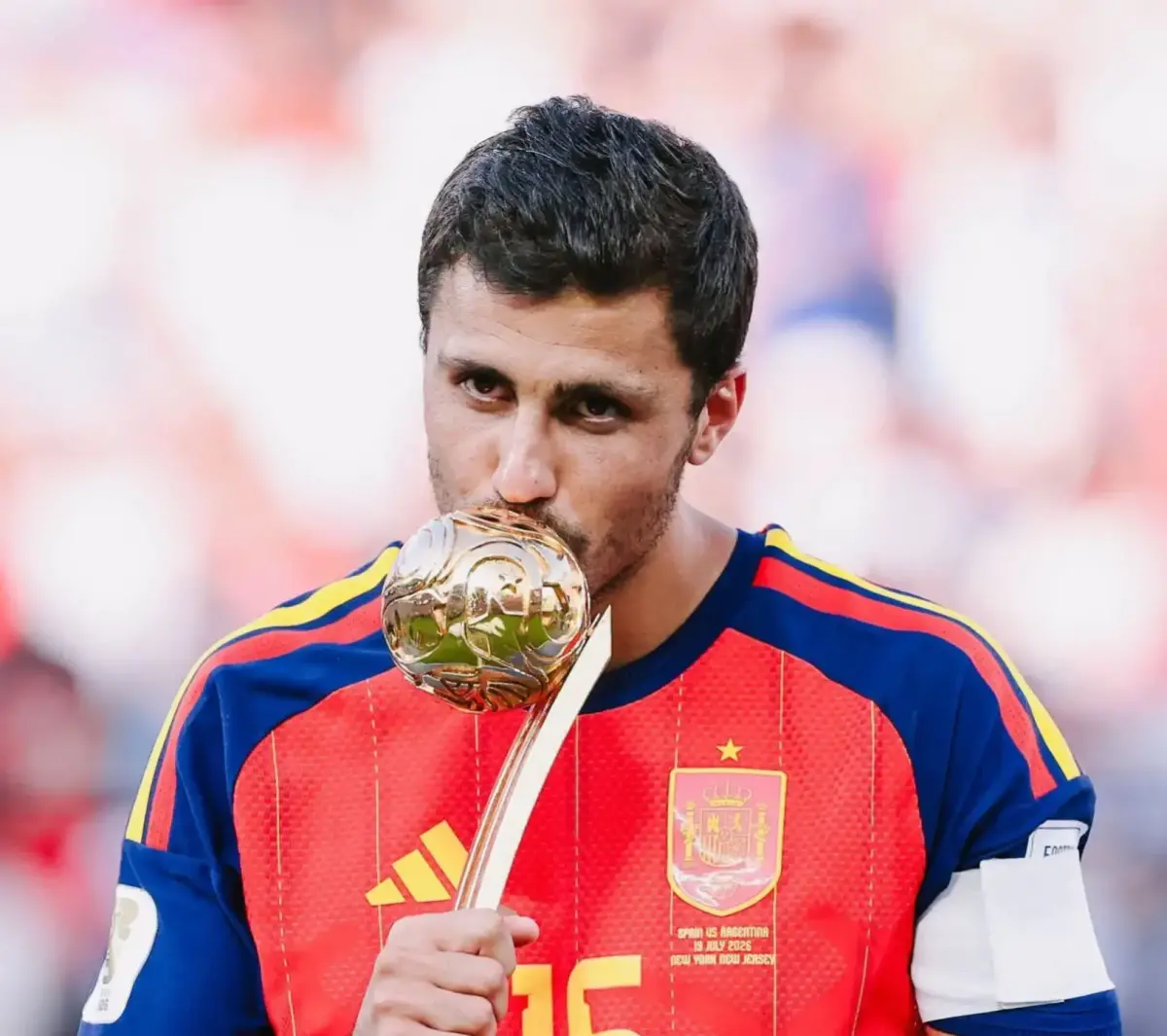
The 2026 FIFA World Cup will be remembered as the tournament of the orchestrator. While strikers often capture the spotlight with their goal-scoring exploits, Rodri's influence on Spain's triumphant campaign was so profound that it commanded universal recognition.
By claiming the Golden Ball as the tournament's best player, the Spanish captain cemented his status as the premier midfielder in world football, proving that control, composure, and tactical intelligence are the true foundations of championship-winning teams.
The heartbeat of a defensive fortress
Rodri was selected as the player of the tournament because he operated as the heartbeat of a Spanish side that was nearly impenetrable. Across eight grueling matches, Spain conceded only a single goal, a defensive record that was directly tied to the midfielder's ability to shield the backline and neutralise opposing threats before they could develop. His positional discipline allowed his teammates to play with freedom, yet he never sacrificed his own contribution to the collective structure.
When Spain were in possession, he was the primary engine, completing more passes and recording more touches than any other player in the tournament. These were not merely cosmetic statistics; they represented a consistent, reliable mechanism that dictated the tempo of matches and kept Spain in control against the world's most dangerous opponents.
A masterclass under pressure
The final against Argentina served as the ultimate testament to his tournament performance. In a high-stakes, pressure-cooker environment, Rodri was imperious, completing 101 of 105 passes and winning 80 percent of his duels. His performance was not an outlier but a culmination of his work throughout the competition, where he consistently demonstrated the rare ability to read the game three steps ahead of anyone else on the pitch.
Leadership and legacy
Beyond the raw data and technical precision, Rodri's selection reflected his immense leadership. Returning to the pinnacle of the sport required a level of mental fortitude that resonated throughout the Spanish squad. As the captain, he embodied the bravery and positivity that his manager demanded. He bridged the gap between defense and attack, serving as the calm constant for a team that had already conquered Europe and arrived in North America with the weight of expectation.
By winning the Golden Ball, Rodri did more than just accept an individual trophy; he validated the importance of the deep-lying playmaker, reminding fans and pundits alike that the most significant impact on a game is often found not in the final finish, but in the relentless, rhythmic pursuit of control.