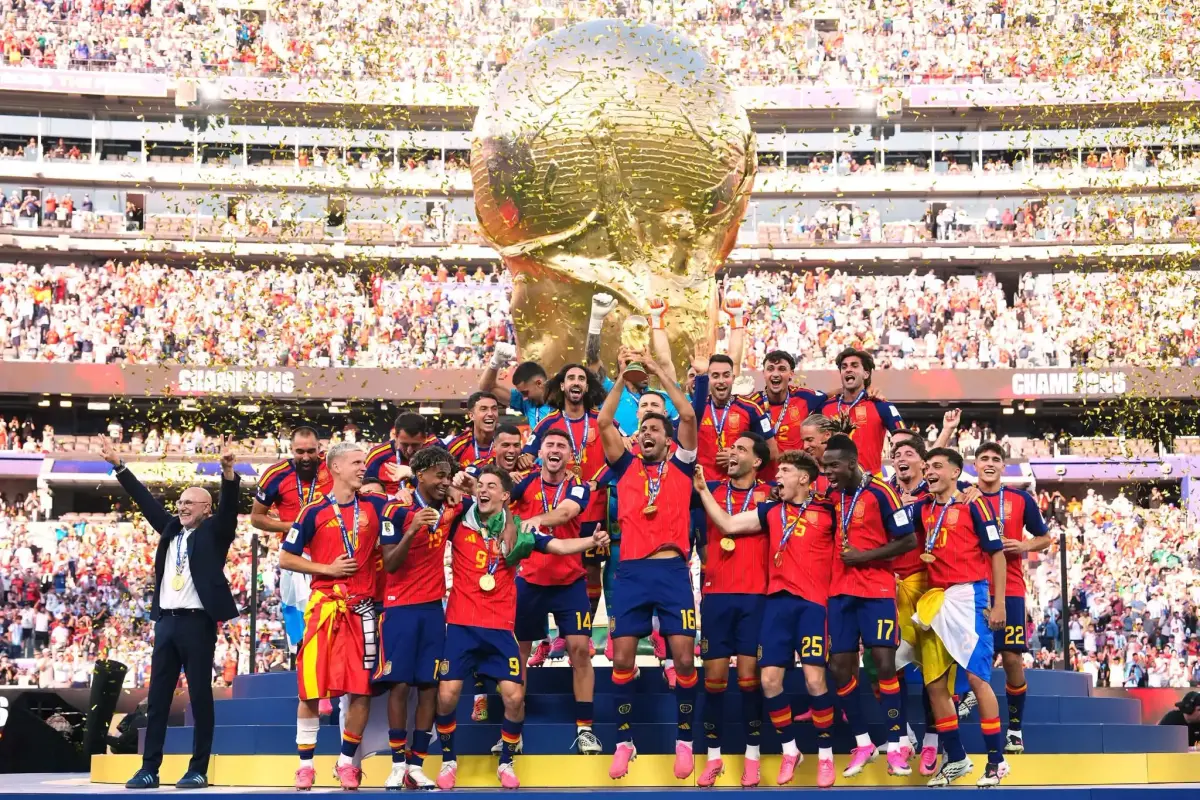
The 2026 FIFA World Cup final concluded in a historic triumph for Spain, who secured their second world title with a disciplined and commanding 1-0 victory over defending champions Argentina.
Hosted at the MetLife Stadium in New Jersey, the match pitted the two continental champions against one another in a clash that ultimately favoured the technical precision and tactical persistence of the Spanish side. It was a night defined by the tension of two distinct footballing ideologies, yet Spain's mastery of the ball proved to be decisive factor under the pressure of the world stage.
Total dominance and defensive resilience
Spain controlled the tempo of the contest from the opening whistle, suffocating Argentina's attempts to build momentum. Throughout the regulation 90 minutes, Spain's high-pressing, possession-heavy style kept the Argentine attack entirely quiet. In a statistical anomaly for a World Cup final, Argentina failed to register a single shot during the entirety of normal time, while Spain continuously tested the resolve of goalkeeper Emiliano Martinez. The Argentine keeper was instrumental in keeping his team in the game, producing a series of desperate, high-quality saves to deny Spanish efforts from the likes of Lamine Yamal and Nico Williams.
The turning point in extra time
The tactical narrative shifted toward the end of regulation when Argentina's Enzo Fernandez was sent off for a second yellow card following a reckless challenge on Pau Cubarsi. Reduced to ten men, the defending champions were forced into a defensive shell, looking increasingly toward a penalty shootout as their only viable path to glory. Argentina's reliance on the individual brilliance of Lionel Messi failed to produce the decisive moment he had provided so often in his storied career, as the Spanish defense remained effectively impenetrable.
The deadlock was finally broken in the 106th minute of extra time. After Pedro Porro sent a deep cross toward the back post, Nico Williams displayed brilliant composure to knock the ball back into the danger zone. Ferran Torres, who had entered the match as a substitute, pounced on the delivery and struck a high, powerful finish into the net. The goal served as the defining moment of the tournament, rewarding Spain for their unwavering adherence to their identity and control.
A new legacy for Spanish football
This victory marks a significant milestone for Spanish football, as their current second golden generation successfully emulated the legacy of the 2010 squad. By conceding only one goal throughout the entire tournament, Spain cemented their reputation as the most balanced and efficient team in the competition.
For Argentina, the loss marked a painful end to their pursuit of consecutive titles, leaving the team to reflect on a final where their usual offensive spark was neutralised by a superior tactical display from their European counterparts.