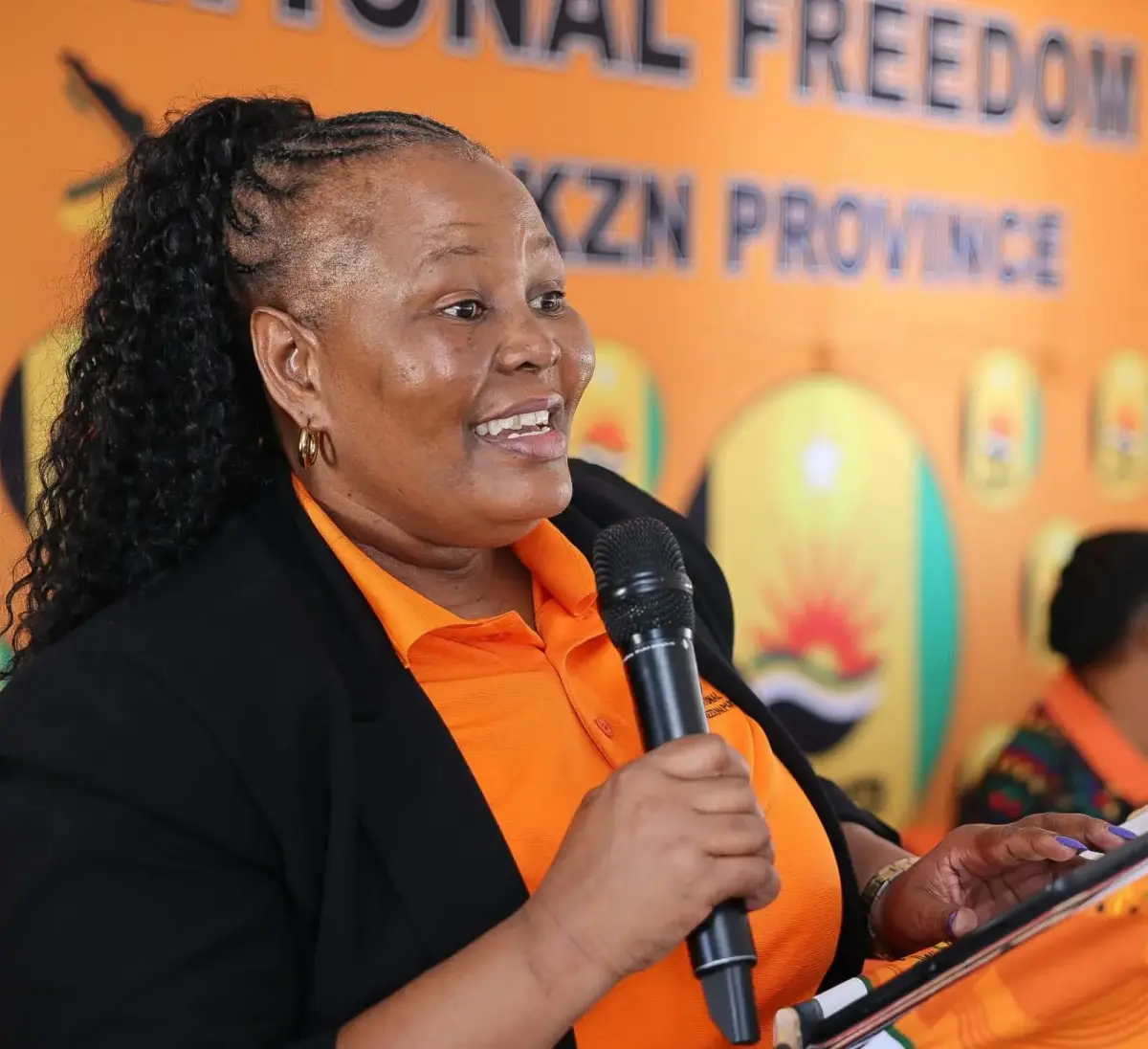
The political trajectory of Mbali Shinga, the KwaZulu-Natal MEC for Social Development and former provincial chairperson of the National Freedom Party, has reached a turbulent conclusion following her formal expulsion from the party.
This development marks the climax of a protracted internal conflict that has exposed deep-seated fractures within the NFP and underscored the persistent volatility of the power-sharing arrangements currently governing the KwaZulu-Natal legislature.
The catalyst for conflict
The fundamental trigger for this expulsion was Shinga's explicit defiance of her party's national leadership during a high-stakes moment in provincial governance. On 15 December 2025, the NFP leadership issued a strict mandate requiring its members to support a motion of no confidence against KZN Premier Thami Ntuli, an initiative spearheaded by the uMkhonto weSizwe Party.
Shinga, representing the NFP within the provincial legislature, chose to ignore this instruction. Her defense rested on her role as a key component of the Government of Provincial Unity, which comprises a coalition of the ANC, IFP, and DA. Shinga maintained that as a cabinet member within that administration, supporting a motion to collapse the provincial government would have been a direct contradiction of her ministerial responsibilities and the core objectives of the coalition.
Disciplinary proceedings and appeal
Following her act of defiance, the NFP initiated formal disciplinary proceedings against Shinga. The charges brought against her centered on allegations of gross insubordination and professional misconduct, specifically regarding her failure to adhere to the official party mandate regarding the legislative vote.
By April 2026, the party's internal disciplinary committee reached a verdict of guilty and recommended her immediate removal. Although Shinga attempted to contest these findings through an internal appeals process, an NFP Appeals Tribunal ultimately rejected her claims in late May 2026. The tribunal maintained that the procedures followed were sound and asserted that the bond of trust essential to the relationship between a party and its representative had been permanently severed.
Legislative consequences and removal from MEC post
The fallout from this decision extends far beyond the confines of the NFP, as it threatens to recalibrate the delicate legislative balance in KwaZulu-Natal. Given that the NFP occupies an influential position within the provincial government, the removal of its primary representative introduces significant uncertainty. The party has formally notified the Speaker of the KZN Legislature to declare Shinga's seat vacant, a procedural step that triggered her automatic removal from the legislature and, consequently, her role as MEC.
As of early June 2026, the Speaker is facilitating the process to swear in a replacement, NFP leader Ivan Barnes, clarifying that the office of the Speaker must act on the party's request to fill the vacancy. Shinga has consistently rejected the legitimacy of these actions, and her legal team has initiated an urgent challenge in the Pietermaritzburg High Court to stay the implementation of her expulsion and seek a judicial review of the party's decision. This legal battle is expected to be a defining moment for future stability of the KwaZulu-Natal Government of Provincial Unity.