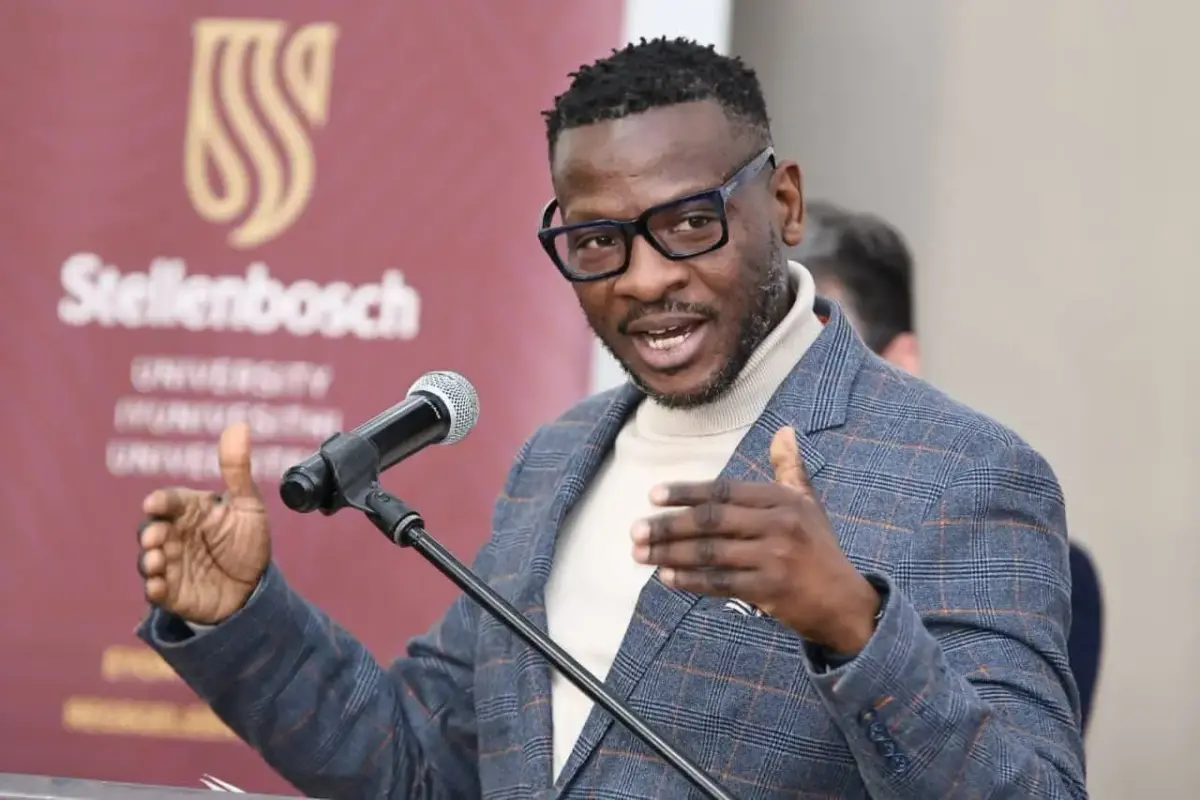
The President of the United Nations Human Rights Council, Ambassador Sidharto R. Suryodipuro of Indonesia, has appointed South African human rights expert Tshepo Madlingozi as Chair of the International Independent Expert Mechanism to Advance Racial Justice and Equality in Law Enforcement (EMLER).
Succession
Madlingozi succeeds Akua Kuenyehia of Ghana, who resigned as a member and Chair of the Expert Mechanism on 9 February 2026. Kuenyehia had served in the role since her appointment on 15 March 2024.
Academic and professional background
Madlingozi brings extensive academic and advocacy experience to the position. He has lectured in jurisprundence at the University of Pretoria and directed the Centre for Applied Legal Studies at the University of the Witwatersrand, where he also taught social justice and human rights.
For more than 13 years he served as national advocacy coordinator and a board member of the Khulumani Support Group. The organisation represents more than 85,000 victims and survivors of apartheid-era gross human rights violations and advocates for reparations, redress and sustainable reconciliation. He has also undertaken consultancy work for the Pan-African Parliament and the Office of the United Nations High Commissioner for Human Rights, including research on international standards against racism, racial discrimination, xenophobia and related intolerance.
Current roles and qualifications
He currently holds academic positions at Stellenbosch University and Nelson Mandela University in South Africa, as well as at the International Institute of Social Studies of Erasmus University Rotterdam in the Netherlands. He previously served as a faculty member of the Vienna Master of Arts in Applied Human Rights in Austria.
Madlingozi is a Commissioner at the South African Human Rights Commission, an independent constitutional body. He holds Master's degrees in sociology and in law, as well as a PhD in law.
About the Expert Mechanism
The International Independent Expert Mechanism to Advance Racial Justice and Equality in Law Enforcement was established in July 2021 by the United Nations Human Rights Council. Its mandate is to make recommendations on the concrete steps needed to ensure access to justice, accountability and redress for excessive use of force and other human rights violations by law enforcement officials against Africans and people of African descent.
The experts are appointed by the President of the Human Rights Council. They are not United Nations staff and do not receive a salary for their work. While the United Nations Human Rights Office provides support to the Expert Mechanism, the experts serve in their individual capacity and are independent from any government or organisation, including the United Nations.