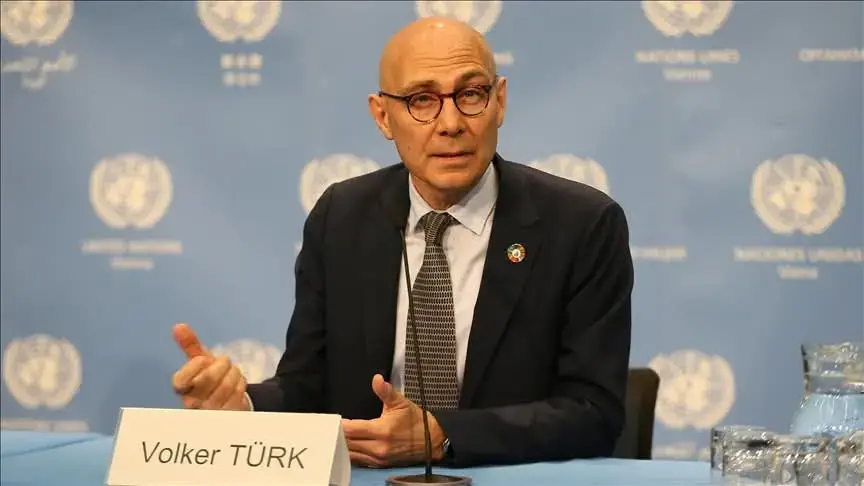
Six months after a ceasefire was officially announced on 10 October 2025, United Nations Human Rights Chief Volker Turk issued a blistering assessment of the situation in Gaza.
He reported that Palestinians across the strip remain in a state of constant peril, as routine Israeli attacks continue to claim lives with what he described as “sweeping impunity.”
A failed cessation of hostilities
Despite the formal agreement intended to halt hostilities half a year ago, the Palestinian Ministry of Health reports that 738 Palestinians have been killed and over 2,000 others injured since the ceasefire began.
The violence has shown no signs of slowing in the current month, with at least 32 fatalities already recorded since the start of April 2026.Turk noted that this unrelenting pattern of killings reflecting a continuing disregard for Palestinian lives, reaching into every corner of civilian life from tents and shelters to medical facilities and classrooms.
Targeting of civilians and professionals
Recent tragedies further underscore the dangers facing civilians, journalists, and humanitarian workers. On April 9, a third-grade schoolgirl named Ritaj Rihan was killed when military forces opened fire on a crowded tent encampment in Beit Lahiya that served as her makeshift classroom.
Just a day prior, Al Jazeera journalist Mohamed Washah was killed by a drone in Gaza City, marking him as the 294th journalist killed since October 2023. This mounting toll also extends to humanitarian personnel, exemplified by the April 6 killing of a World Health Organization driver. To date, 589 aid workers have been killed during the conflict, including nearly 400 UN staff members.
Systemic barriers to survival
High Commissioner Turk drew particular attention to the “yellow line,” a shifting and poorly marked deployment line used by Israeli forces. He emphasised that targeting civilians based on their proximity to these lines constitutes a war crime, regardless of where the lines are drawn.
The humanitarian crisis is being further exacerbated by persistent restrictions on the entry of food and medical supplies, alongside the systematic dismantling of civil administration and civilian infrastructure.
A demand for global accountability
In his concluding remarks, Turk urged the international community to move beyond rhetoric. After two and a half years of conflict and tens of thousands of deaths, he called for meaningful actions to end violations of international law.
He warned that Palestinians currently have no blueprint for survival, as no safety or protection is afforded to them regardless of their locations or actions, making it increasingly difficult to reconcile the current reality with the concept of a ceasefire.
“Palestinians have no blueprint for survival: whatever they do or don't do, wherever they go or don't go, there is no safety or protection afforded to them. It is hard to square this with a ceasefire,” Turk stated, pointing to the ongoing violations and the need for immediate international intervention.