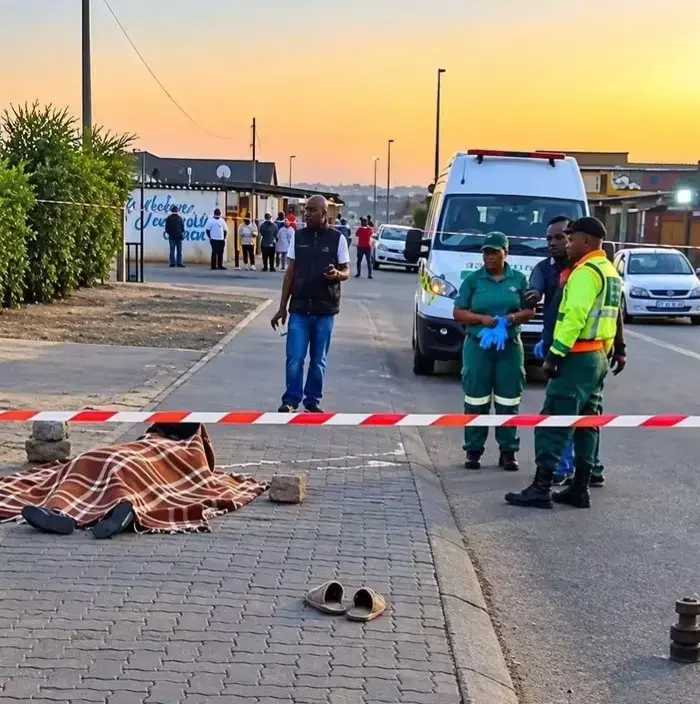
Gauteng police are investigating a case of murder and robbery following the shooting of a 23-year-old woman in Temong, Mapungubwe Street, Tembisa, at about 05:45 on the morning of 28 September 2026.
The woman was reportedly on her way to work when she was shot and killed during an alleged robbery. Her belongings were taken during the incident. The deceased has been identified; however, her family is yet to be formally notified.
Preliminary investigations have not established any link between this incident and the recent cases involving the bodies of women found in Ekurhuleni. No one has been arrested yet, and police are following up on leads.
Ongoing challenge of robbery-related crime in South Africa
This case highlights the continuing threat of robbery, particularly armed or aggravated robbery, which remains one of the most feared forms of crime in the country.
According to the latest available SAPS statistics, robbery with aggravating circumstances declined by 14.7% in the first quarter of the 2026/27 financial year (April-June 2026), falling from 31,475 cases to 26,839. Significant reductions were also recorded in key subcategories: residential (house) robberies, business robberies, carjackings and robberies at non-residential premises.
Earlier quarterly figures showed similar downward trends. In January-March 2026, aggravated robbery fell by 15.6%, with TRIO crimes (carjackings, residential robbery and non-residential robbery) dropping by nearly 20%.
Despite these improvements, the absolute numbers remain high. Gauteng continues to account for a large share of aggravated robberies nationally. Street robberies and opportunistic attacks on people going about their daily routines – such as commuting to work in the early morning – continue to affect communities across the country. Victim surveys also indicate that many incidents of street robbery and personal theft go unreported.
Robbery remains a crime that instils widespread fear because it often involves the threat or use of violence, can occur in public spaces or at home, and frequently results in the loss of valuables as well as physical harm or, as in this case, loss of life. While police report progress through intelligence-led operations and targeted interventions, the persistence of these crimes underscores the ongoing vulnerability of ordinary South Africans during everyday activities.