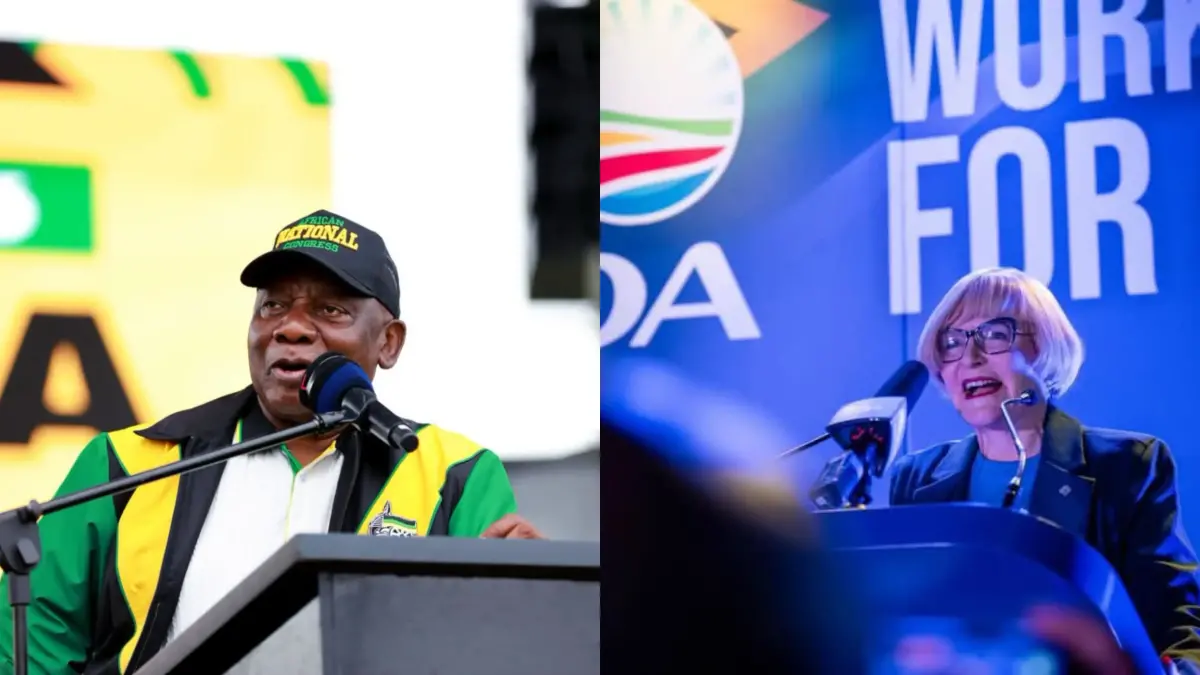
Serious claims of political influence, tender irregularities and a cover-up involving former Western Cape Premier Helen Zille, President Cyril Ramaphosa and advertising agency TBWA Hunt Lascaris have been revived by Baas Kruger, a faceless Facebook investigative journalist.
The detailed post centres on a communications contract awarded by the Western Cape Department of the Premier during Zille's time in office, and Ramaphosa's earlier business links to the agency.
The 2001 investment
In June 2001, Cyril Ramaphosa's Millenium Consolidated Investments (MCI) acquired a 25% stake in TBWA Hunt Lascaris. Ramaphosa became chairman of the agency. Contemporary reports confirmed that MCI would appoint directors to the board. The investment was publicly announced at the time.
The Western Cape communications tender
Years later, under Premier Hellen Zille, the Western Cape government awarded a communications and branding contract to TBWA Hunt Lascaris. The deal covered brand strategy, corporate identity and communications services that provincial departments could use.
Media reports, particularly a Sunday Times article, initially put the potential value at R1 billion. Zille strongly rejected the figure, stating that the provincial government's relevant annual communications spend was estimated at between R50 million and R70 million, with the agency's professional fees substantially lower. An internal Provincial Treasury review identified shortcomings in control measures and good governance principles. The provincial government later described these as a “learning experience” rather than evidence of regulatory breaches or corruption.
Zille publicly declared that she would resign if any corruption was found.
Public Protector investigation
Complaints were lodged with then Public Protector Thuli Madonsela by COSATU Western Cape, the ANC in the province and a civil society organisation. The complaints alleged that the tender was awarded without proper procedures, was not adequately advertised, and that its scope had been improperly expanded.
A draft report, referred to as “We Made Mistakes,” raised serious concerns about the process. It criticised the inclusion of special advisers, including then DA strategist Ryan Coetzee, on the Bid Evaluation Committee and indicated that the process was invalid, recommending that the contract be terminated.
After further submissions from the Western Cape government, Madonsela released the final report in June 2012, titled “Yes, We Made Mistakes.” The final report found instances of maladministration: failures in demand management, inadequate record-keeping of Bid Evaluation Committee proceedings, and the improper or ill-advised appointment of special advisers to the evaluation committee. It also identified a small amount of fruitless and wasteful expenditure (R8,696) linked to re-advertising.
Importantly, the final report concluded that there was no corruption in the awarding of the corruption in the awarding of the contract, no political interference or manipulation by the Premier, and that the contract itself was not unlawful. The recommendation to cancel the tender was withdrawn. The Public Protector explicitly stated that the R1 billion valuation was not supported by the evidence. The fixed component for once-off deliverables was approximately R1.52 million, with overall communications costs capped.
Zille welcomed the final report as vindication, describing the controversy as a “storm in a teacup” driven by political opponents.
The cover-up allegation
Baas Kruger's post goes further. It claims the provisional findings included four counts of corruption, that a meeting between Zille and Madonsela led to these being removed or softened in the final report, and that the lead investigator, Advocate Ruthven (Janse) van Rensburg, was subsequently employed by Zille in a senior role as Chief Director of Forensic Services in the Western Cape Office of the Premier – allegedly as a bribe for the cover-up.
These specific allegations of bribery and a deliberate cover-up through employment remain claims advanced by the faceless Facebook investigative journalist. Public reporting from the period confirms the shift from draft to final findings and the investigator's name appearing in related coverage. However, independent contemporaneous evidence establishing the employment as a quid pro quo, or confirming that “four counts of corruption” were erased, has not been widely documented in major news archives.
Broader context
The episode unfolded against intense political rivalry between the DA-led Western Cape and the ANC. The tender process became a flashpoint for accusations of irregularities on one side and claims of a manufactured scandal on the order.
Ramaphosa's 2001 investment in TBWA is a matter of public record. Whether that stake created any ongoing influence by the time of the 2010-2012 tender process forms part of the narrative pushed in the recent allegations.
Baas Kruger frames the events as evidence that both Zille and Ramaphosa are corrupt, with Zille allegedly using senior government positions as inducements. These remain serious allegations that, if pursued, would require documentary evidence, independent scrutiny and due process. The official Public Protector final report from 2012 cleared the award of corruption and unlawfulness while acknowleding administrative shortcomings.
The renewed circulation of these claims has once again placed the long-settled communications tender back into public debate, highlighting persistent questions about transparency, political connections and accountability in government contracting.