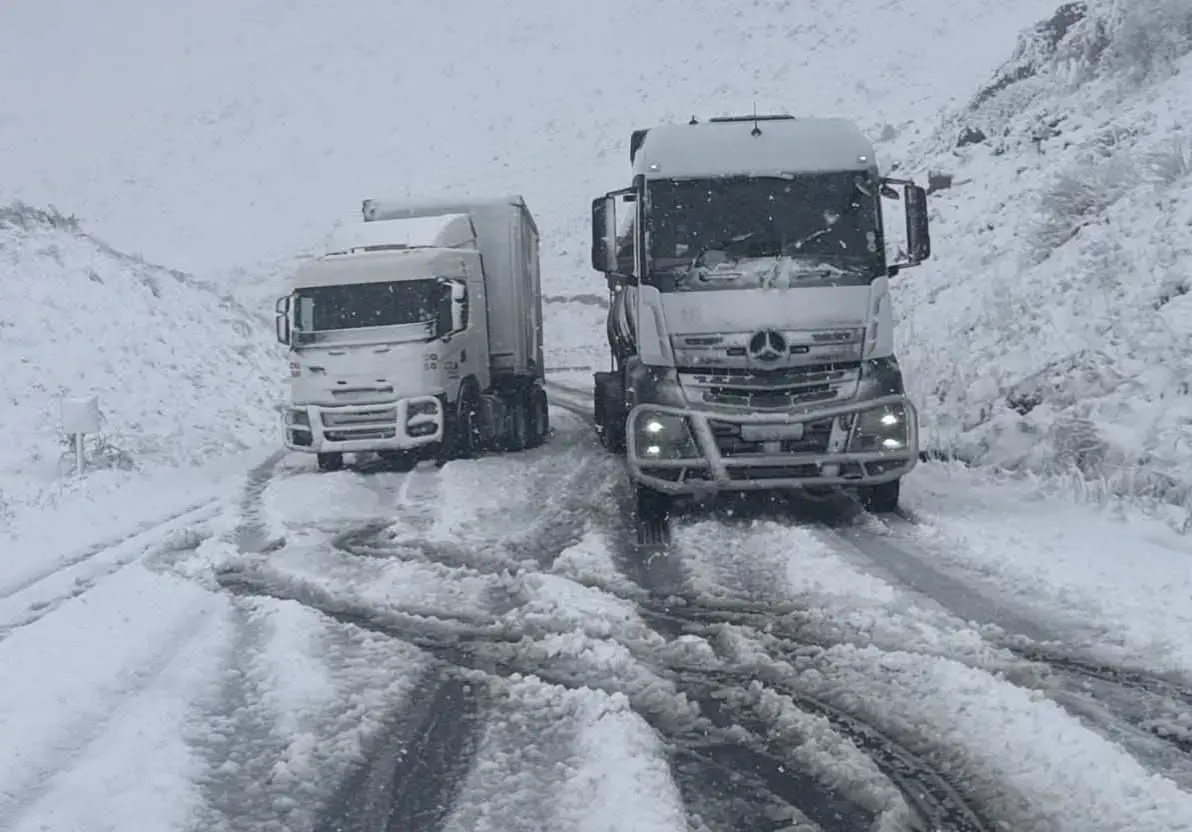
Parts of South Africa woke up to a severe winter weather blanket on Monday, as heavy snowfall and biting cold conditions swept across parts of KwaZulu-Natal (KZN) and the Eastern Cape. The abrupt weather shift has prompted emergency road closures, disrupted local infrastructure, and forced provincial authorities to mobilise high-alert disaster management teams.
Major routes and mountain passes shut down
The South African Weather Service (SAWS) issued a Yellow Level 2 warning for disruptive snow affecting the high grounds and southwestern parts of KZN, alongside warnings for the Eastern Cape.
The accumulation of snow and severe road icing have rendered multiple major arterial routes and critical mountain passes impassable:
KwaZulu-Natal: The R617 between Underberg and Swartberg/Kokstad has been completely closed following reports of a stuck struck and hazardous, near-zero visibility. Key areas like Kokstad, Kingscourt, and Nottingham Road in the Midlands have experienced heavy blanketing, with local authorities redirecting traffic. A local clinic in KZN also suffered temporary utility disruptions, losing electricity and phone lines overnight due to the severe weather.
Eastern Cape: Several major mountain passes have been officially shut down by the Department of Transport. These include Penhoek Pass (between Komani and Jamestown), Barkly Pass (between Khowa and Barkly East), Boesmanshoek Pass (between Molteno and Sterkstroom), and Lootsberg Pass and Wapadsberg Pass (affecting the N9/6 toward Middelburg in the Chris Hani District Municipality).
Government response and public safety warnings
Provincial leaders have urged extreme caution as disaster teams work to manage the crisis.
KwaZulu-Natal MEC for Transport and Human Settlements, Siboniso Duma, strongly advised members of the public and motorists to delay non-essential travel and remain indoors where possible. “Prevention is better than cure,” Duma stated, noting that road graders and Road Traffic Inspectorate (RTI) teams have been deployed rapidly to clear snow accumulations before they pose a fatal entrapment risk similar to past severe weather events.
Similarly, the Eastern Cape Department of Transport has implored road users to check updates frequently, avoid impacted high-altitude routes, and use alternative pathways.
With freezing temperatures expected to persist over the coming days, disaster management teams remain on high alert across both provinces to assist vulnerable communities, secure livestock, and restore interrupted services.