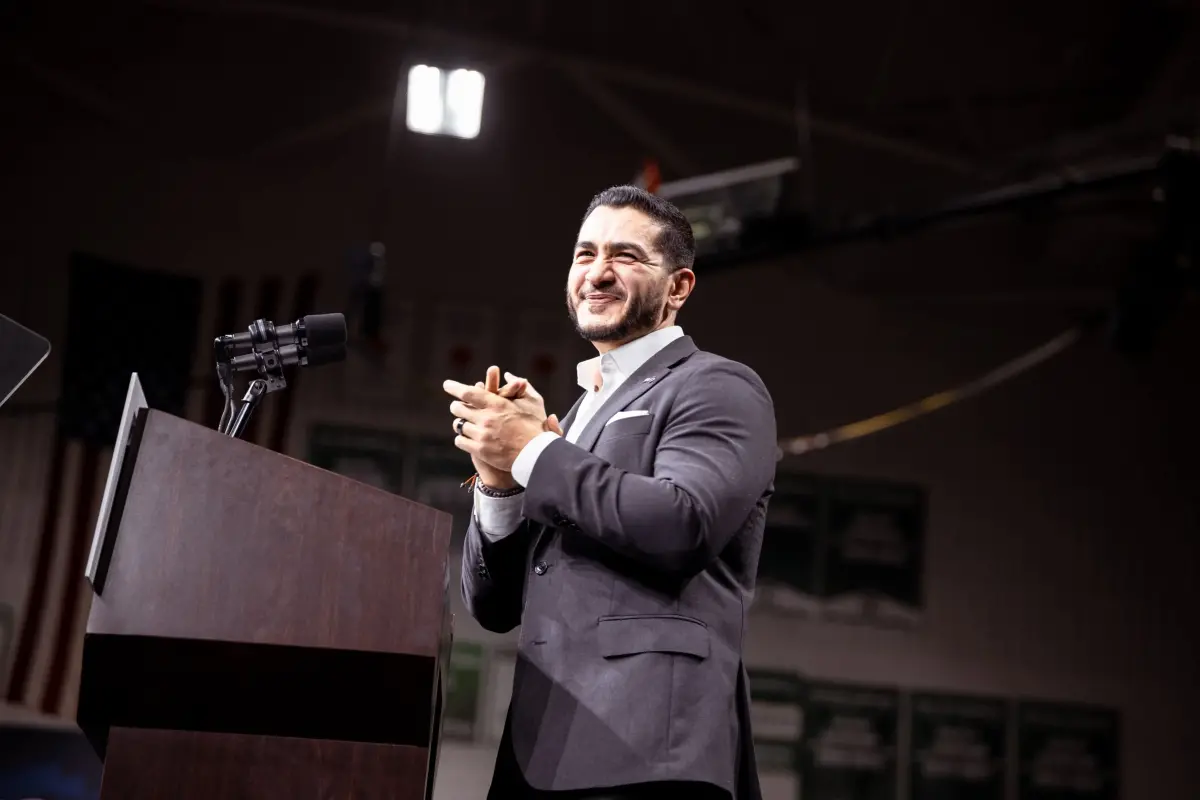
In a historic political breakthrough, progressive Democrat Abdul El-Sayed has won the United States Senate election in Michigan, securing a critical victory in the midterm contest. The triumph marks a major landmark in American political history as El-Sayed becomes the first Muslim elected to the United States Senate.
A competitive statewide campaign
El-Sayed achieved victory following a closely watched general election campaign against Republican nominee Mike Rogers, a former U.S. Representative. The Michigan Senate race drew national attention throughout the election season as both major political parties fought for control of the chamber.
El-Sayed anchored his platform around bold progressive reforms, focusing on expanded public healthcare options, campaign finance overhaul, environmental protections, and economic support for working families. Former congressman Mike Rogers campaigned on conservative economic strategies and security priorities, presenting a stark ideological contrast for Michigan voters.
The Democratic coalition mobilised high turnout across key population centers, including Wayne County and Detroit, alongside robust support in university towns such as Ann Arbor and heightened participation among young, Arab American, and Muslim American communities across the state.
From public health officer to Capitol Hill
Before his Senate bid, El-Sayed established a prominent career in public health and municipal administration. A physician and epidemiologist by training, he previously directed the Detroit Health Department, where he gained wide recognition for addressing childhood lead poisoning and public health equity.
He expanded his statewide visibility during a 2018 gubernatorial primary bid before taking on leadership as Director of Health, Human, and Veterans Services for Wayne County. Throughout the campaign, El-Sayed drew heavily on his healthcare background to argue for lowering prescription drug costs and broadening access to medical care.
Priorities for the upcoming term
As El-Sayed prepares to take office in the United States Senate, his legislative agenda centers on several key progressive promises.
He has emphasised pushing for federal healthcare protections, strengthening union manufacturing jobs in Michigan's industrial sector, investing in green technology infrastructure, and reducing the influence of corporate funding in federal campaigns.
His election adds a prominent progressive voice to the Senate Democratic caucus and represents a historic shift in Michigan's federal representation.