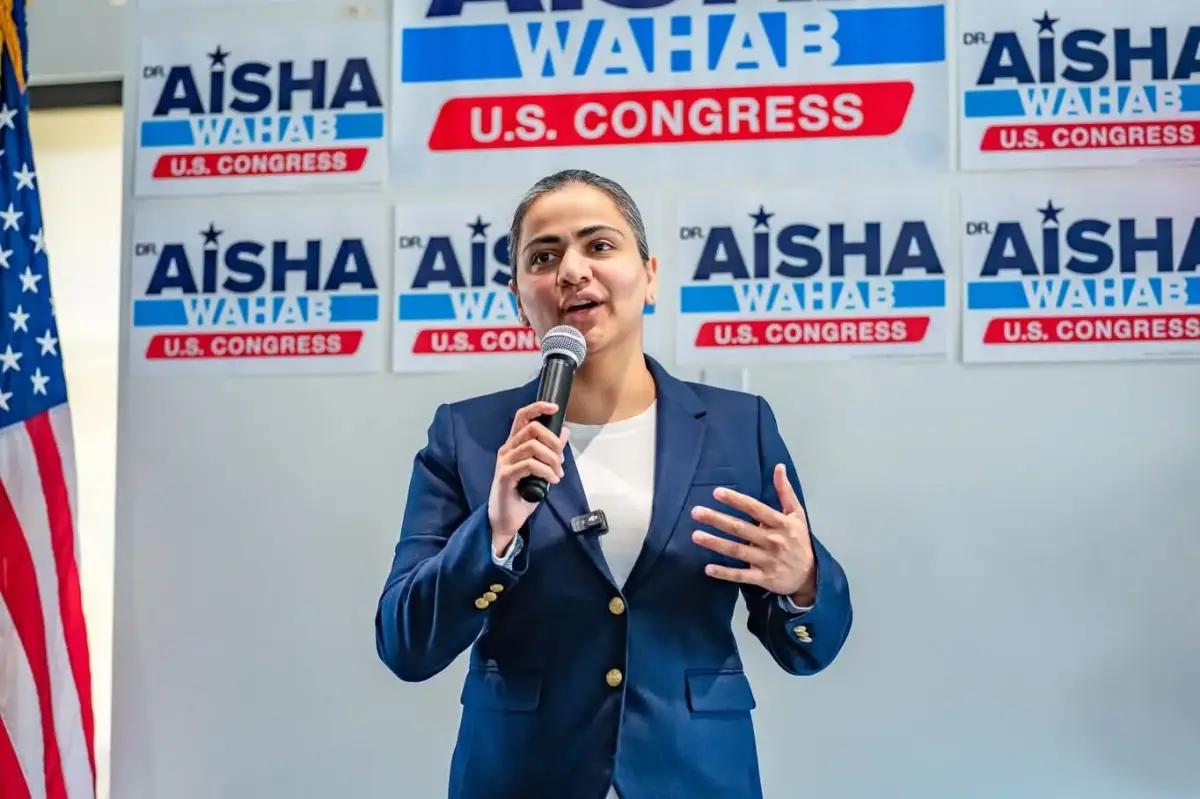
Aisha Wahab, a progressive California state senator, has secured victory in a special election to represent California's 14th Congressional District in the U.S. House of Representatives. The Associated Press and multiple news outlets called the race on Thursday, 20 August 2026, after final ballot counts confirmed her win over fellow Democrat Melissa Hernandez in the 18 August runoff.
Wahab received approximately 53 percent of the vote to Hernandez's 47 percent, overcoming a late surge of outside spending that narrowed what had been a substantial primary lead.
Background on the vacant seat
The seat became vacant after former Representative Eric Swalwell resigned in April 2026 amid allegations of sexual misconduct, which he has denied. The solidly Democratic district covers parts of Alameda County in the East Bay, including Hayward, Fremont, Dublin, Pleasanton, and Livermore.
Wahab, who previously served on the Hayward City Council and has represented Senate District 10, will complete the remainder of Swalwell's term through January 2027. She and Hernandez are scheduled to face each other again in the November general election for a full two-year term.
A milestone for representation
Wahab's path to Congress marks a historic milestone. An Afghan American and the first Muslim woman elected to the California State Senate, she will become the first Afghan American to serve in the U.S. Congress. Raised in foster care after her family fled Afghanistan, she has described her journey as a testament to the American Dream. In a statement following the race call, she said the victory “belongs to the voters who made clear that our district cannot be bought” and pledged to “fight for this district that raised me.”
Outside spending and the campaign dynamics
The contest drew national attention in its final weeks due to heavy independent expenditures. Super PACs linked to the American Israel Public Affairs Committee, including the United Democracy Project, spent millions of dollars on advertising that supported Hernandez and criticised Wahab.
Reports put the total outside spending favouring Hernandez or opposing Wahab at more than $5 million in the closing stretch, with AIPAC-affiliated groups accounting for a significant share. Wahab had led Hernandez by more than 20 points in the June special primary, but the late advertising narrowed the margin considerably in a low-turnout August runoff.
Wahab's progressive positions, including her description of Israel's military campaign in Gaza as genocide, positioned her as a target for pro-Israel groups. Hernandez, a former mayor of Dublin and president of the Bay Area Rapid Transit board, was viewed as the more moderate candidate and received the bulk of the outside support. Despite the financial disparity, Wahab maintained that her campaign focused on local priorities such as housing affordability, public safety, and economic opportunity rather than engaging in negative attacks.
Looking ahead
Once sworn in, Wahab will slightly improve Democrats' numbers in the closely divided House. Her win also sets up a rematch in November that is expected to remain competitive, given the resources already demonstrated by outside groups in the special election. For now, the result stands as a notable rejection of high-spending intervention in a Democratic primary contest and a personal milestone for a candidate who rose from local office to the national stage.