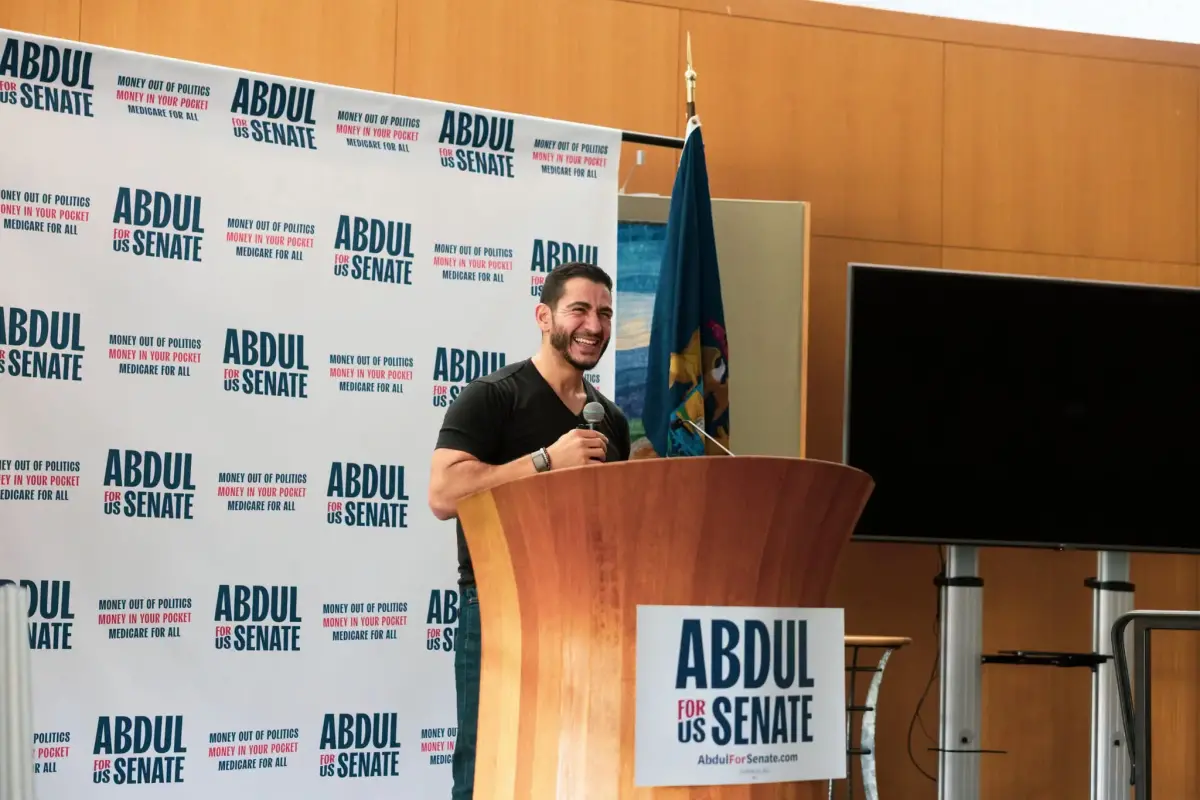
In one of the most high-stakes and fiercely contested primaries in modern political history, progressive epidemiologist and former public health official Abdul El-Sayed has emerged victorious in Michigan's Democratic primary for the U.S. Senate.
El-Sayed's primary win marks a watershed moment for the progressive wing of the Democratic Party, overcoming a massive fundraising deficit, an onslaught of heavy outside spending, and fierce opposition from party establishment figures.
A hard-fought battle against the establishment and millions in AIPAC spending
The race for Michigan's open Senate seat – left vacant by retiring two-term Democratic Senator Gary Peters – quickly transformed into a national battleground proxy war. El-Sayed faced off against four-term U.S. Representative Haley Stevens, a candidate backed by much of the traditional party apparatus, including endorsements from prominent leaders like Governor Gretchen Whitmer.
The primary shattered spending records, becoming one of the most expensive Senate primaries in U.S. history. Crucially, El-Sayed defeated an opponent heavily backed by the American Israel Public Affairs Committee (AIPAC). AIPAC and its affiliated super PACs poured tens of millions of dollars into the race to support Stevens – including massive satellite investments totaling over $30 million aimed at blocking El-Sayed's path to nomination.
Despite being heavily outspent by millions of dollars in pro-Israel and establishment PAC money, El-Sayed built a powerful, grassroots-driven coalition. Tapping into deep-seated anti-establishment frustrations, his populist platform – centered on Medicare for All, wealth taxes on billionaires, aggressive corporate antitrust enforcement, and getting “money out of politics” – resonated strongly with younger voters, working-class families, and progressive activists.
His campaign earned high-profile endorsements from national progressives, including U.S. Senator Bernie Sanders and U.S. Representative Alexandria Ocasio-Cortez, as well as major labour backing from the United Auto Workers (UAW).
Overcoming scrutiny and forging unity
El-Sayed's path to the nomination was fraught with intense controversy. As he climbed in the polls, his campaign weathered fierce scrutiny over his outspoken foreign policy stances, particularly regarding the Israel-Palestine conflict, and intense pushback from opponents who criticised his campaign events and sharp rhetoric targeting his opponent's heavily funded backing. El-Sayed repeatedly rebuffed these attacks as desperate attempts by entrenched special interests to protect a broken status quo.
Speaking to ecstatic supporters at his election night watch party, El-Sayed credited the historic win to the relentless energy of a movement that refused to be sidelined.
Looking ahead to November
With the primary battle concluded, attention immediately pivots to the general election this November. El-Sayed will face Republican nominee Mike Rogers, a former U.S. congressman, in a race that is expected to be vital in determining the balance of power in the U.S. Senate.
Recognising the high stakes of the upcoming general election, El-Sayed used his victory speech to call for immediate party unity, emphasising that the overarching goal must remain defeating the Republican opposition and keeping the seat in Democratic hands.