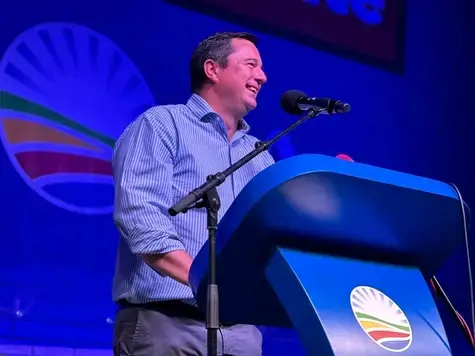
In a move that signals a significant shift in the South African political landscape, John Steenhuisen announced on Wednesday that he will not seek a third term as Federal Leader of the Democratic Alliance(DA) at the party's upcoming elective congress in April 2026.
Speaking from his home turf in eThekwini, Steenhuisen characterised his decision as a “mission accomplished,” reflecting on a tenure defined by the party's historic entry into the Government of National Unity(GNU) following the 2024 general elections.
“I have delivered everything that I promised my party when I was first elected,” Steenhuisen told reporters. “My term will remembered for leading the DA into national government and putting South Africa on a new path to prosperity.”
A strategic exit
While Steenhuisen framed the departure as a voluntary handover of a “fundamentally healthier party,” the announcement follows months of intense internal speculation. Reports suggest the leader faced mounting pressure from senior party figures and influential donors.
The decision is reportedly part of a negotiated transition. Under the terms of the deal, Steenhuisen is expected to retain his high-profile role as the Minister of Agriculture, allowing him to focus on his cabinet portfolio while the party selects a fresh face to lead them into the 2026 Local Government Elections.
Race for succession
Steenhuisen's withdrawal immediately turns the spotlight on potential successors. Geordin Hill-Lewis, the Mayor of Cape Town, has emerged as the clear frontrunner to take reins. Widely regarded as a darling of Federal Council Chair Helen Zille, Hill-Lewis is seen by many party insiders as a unifying figure capable of bridging the gap between the DA's traditional base and its new role as a governing party.
The transition comes at a delicate time for the DA as it navigates the complexities of a 10-party coalition government. While Steenhuisen's exit marks the end of an era that saw the DA move from the “permanent opposition” to the halls of the Union Buildings, the party now faces the challenge of maintaining stability during a change in leadership.