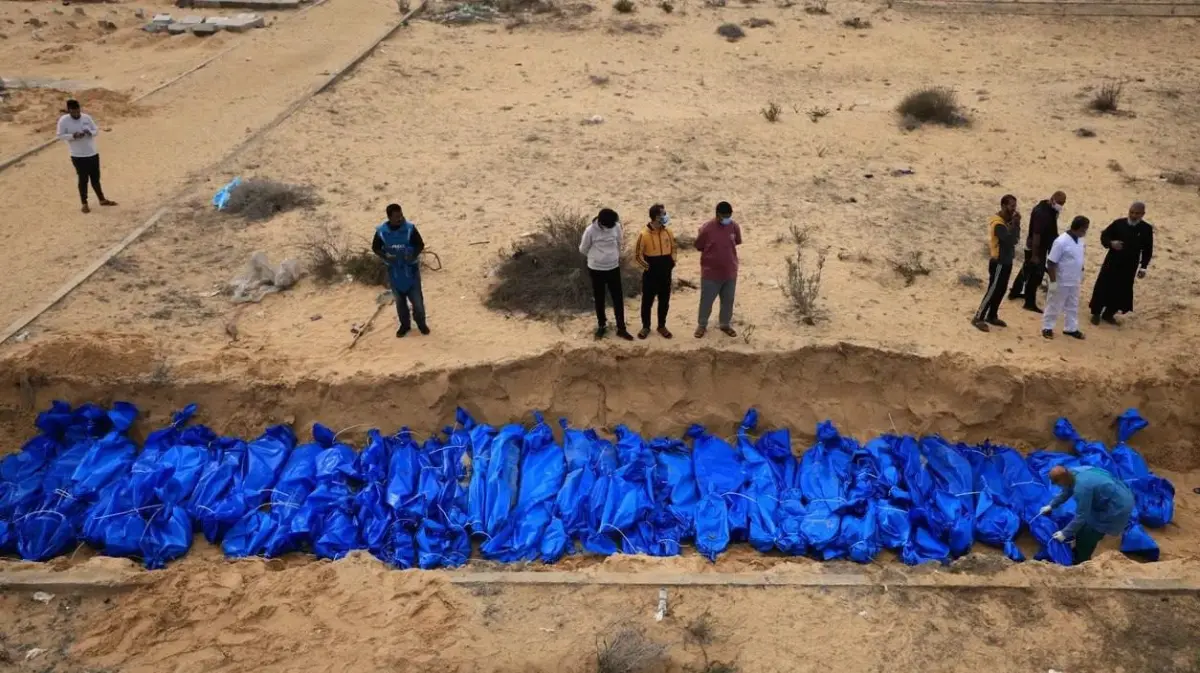
A U.S.-brokered ceasefire in the Gaza Strip, now entering its fourth month, is facing its most severe test yet as a series of Israeli military strikes continue to claim civilian lives across the enclave.
Despite the official cessation of hostilities that began in October 2025, the humanitarian toll has spiked in early February 2026, leaving the territory's two million residents in a state of what UN officials describe as “massive trepidation.”
Recent escalations and casualties
In the last 24 hours alone, medical sources at Shifa Hospital and Nasser Hospital confirmed the deaths of at least 17 Palestinians, including women and children. This follows a particularly bloody weekend in which nearly 30 people were killed in strikes hitting residential buildings in Gaza City and a tent camp for displaced families in Khan Younis.
According to the Palestinian Ministry of Health, the number of Palestinians killed by Israeli fire since the ceasefire was established on October 10 has surpassed 530. Key incidents reported this week include:
- Gaza City: A strike on an apartment building and a nearby police station killed 14 people, including four policewomen and several children.
- Khan Younis: An Israeli airstrike on a tent camp caused a massive fire, killing seven members of a single family, including three children and three grandchildren.
- The “Yellow Line”: Continued shelling and gunfire near the agreed-upon withdrawal lines have targeted civilians attempting to access their farmland or return to their homes.
Diverging narratives
The Israeli military (IDF) has defended the strikes, characterising them as “precision responses” to ceasefire violations by Hamas. On Wednesday, the IDF reported that an officer was seriously wounded by gunfire near the buffer zone, prompting retaliatory aerial attacks.
However, international observers and local officials tell a different story. The Gaza Government Media Office has documented over 1,450 violations by Israeli forces since October, ranging from artillery shelling and direct shootings to the demolition of property.
UNRWA's Acting Director of Affairs in Gaza, Sam Rose, noted the “competing dynamics” of the situation: while the Rafah crossing recently reopened for limited medical evacuations, the continued killing of civilians in airstrikes undermines any sense of security.
A catastrophic humanitarian backdrop
The violence comes as Gaza remains in the grip of a historic humanitarian crisis. While the ceasefire was intended to facilitate the flow of aid, UN agencies report that only about 43% of the allocated aid trucks have been allowed to enter the Strip.
“There can be no lasting peace without accountability for the crimes committed,” UN experts warned in a recent statement, urging a full arms embargo and international investigations into the ongoing killings.
International reaction
Regional leaders from Saudi Arabia, the UAE, and Qatar issued a joint statement this week condemned the “repeated violations” by Israel. They warned that these breaches represent a dangerous escalation that could derail the transition to the “second phase” of the peace plan, which involves the reconstruction of Gaza's decimated infrastructure.
As the “clock ticks louder,” in the words of UN committee chairs, the people of Gaza remain trapped between the hope of a permanent end to the war and the reality of falling missiles that continue to bypass the promise of a truce.